Quick answer: When is the best time to visit Spiti Valley? For most travellers, June to September is the best season: both main approaches are usually accessible, making the full circuit and seasonal Chandratal Lake visits possible. October–November brings golden landscapes and clear skies; December–March is for serious snow lovers travelling via Shimla and Kinnaur only. Mountain weather can change plans quickly.
Who should go when? First-timers: July–September · Bikers: July–September · Photographers: September–October · Snow seekers: January–February · Couples: September or a carefully planned winter escape.
In Spiti, choosing a month is really choosing a different journey. Summer opens the dramatic Kunzum La circuit. Autumn turns Kinnaur's orchards golden. Winter replaces busy viewpoints with quiet villages, icy rivers and unforgettable cold. This Spiti Valley month wise weather guide helps you decide what your trip should look like—not just which month gets the most visitors.
Spiti at a Glance: Best Season to Visit Spiti
These are approximate daytime/night-time ranges, not forecasts. Temperatures vary considerably with altitude, sunshine, snowfall and the exact village; exposed passes are colder than Kaza. Road access is never guaranteed.
| Season | Months | Approx. Day / Night Temp | Roads Open | Best For | Serenade Trip |
|---|---|---|---|---|---|
| Deep winter | Dec–Feb | −5 to 5°C / −15 to −20°C or lower | Kinnaur side, subject to closures; Kunzum closed | Snow, frozen scenery, quieter villages | Best of Winter Spiti; private winter trips |
| Late winter / spring | Mar–May | 0 to 15°C / −10 to 2°C | Usually Shimla–Kinnaur only | Snow remnants, fewer crowds | Weekly winter group trip; private trips |
| Summer | Jun–Sep | 10 to 22°C / 0 to 10°C | Both routes usually accessible after Kunzum opens | Full circuit, Chandratal, biking | Summer Spiti with Chandratal (Jul–Sep) |
| Autumn | Oct–Nov | 0 to 15°C / −10 to 2°C | Kinnaur generally; Kunzum becomes unreliable or closes | Crisp light, fall colours | Winter group trip from Oct; private from Nov |
Planning note: These broad Spiti temperature month wise estimates are for trip planning, not a substitute for current forecasts. Our Best of Winter Spiti itinerary specifically warns of nights around −15°C to −20°C.
Want a ready-made Spiti Valley itinerary?
Tell us a few details — we'll send free pricing and dates.
Two Routes into Spiti: Why the Month Matters
Shimla → Kinnaur → Kaza: the winter lifeline
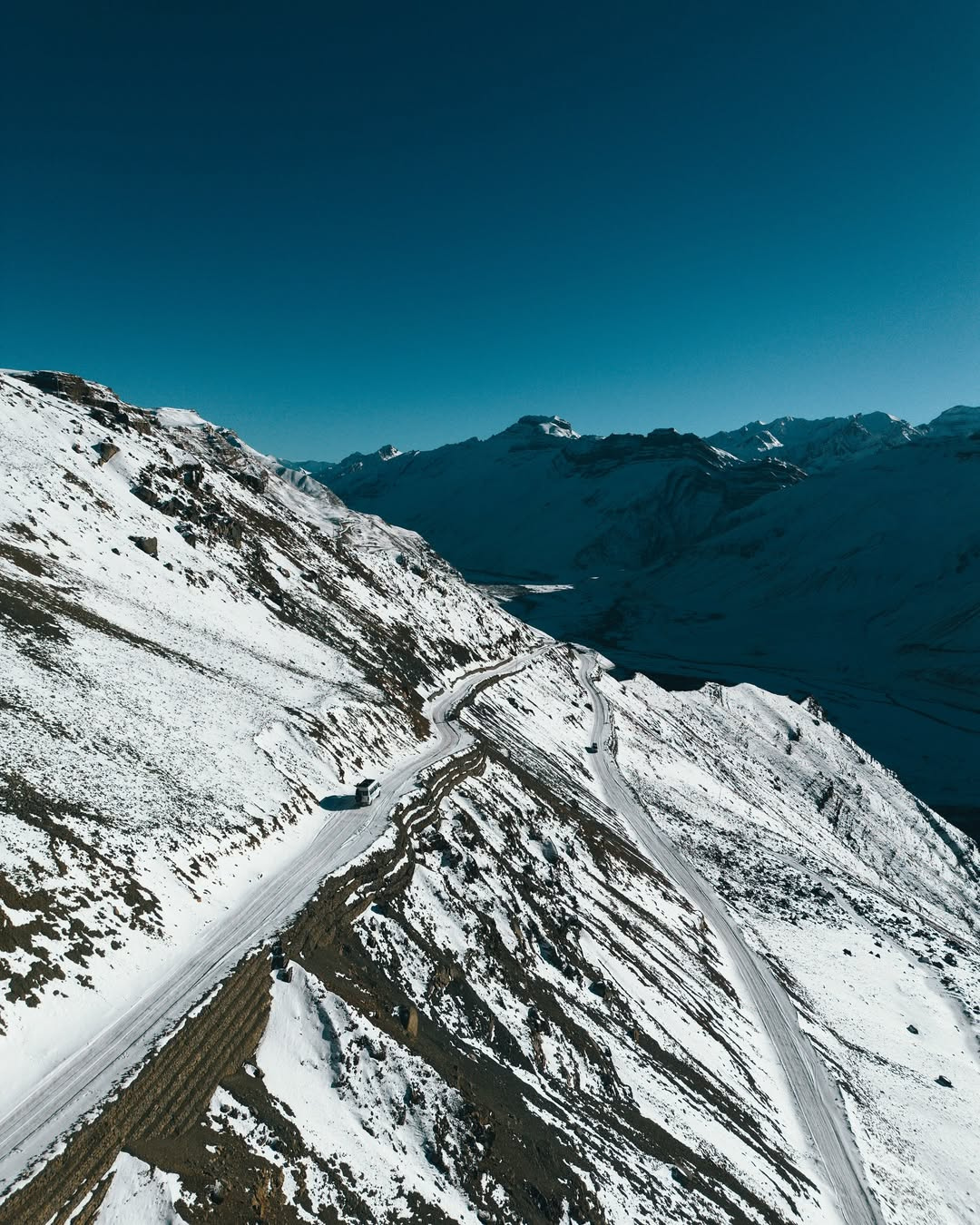
The Shimla to Kaza route in winter follows the Kinnaur side through places such as Kalpa, Nako and Tabo. It is usually accessible for much of the year, although snow, rockfall, ice and landslides can interrupt individual sections without notice. This is the route used for winter Spiti journeys, generally returning the same way. The ascent also lets travellers gain altitude more gradually than a direct approach from Manali.
Manali → Atal Tunnel → Kunzum La → Kaza: the summer circuit
The Manali approach continues beyond the Atal Tunnel towards Batal and Kunzum La before reaching Kaza. It typically opens around June, sometimes later, and can close with snowfall around October/November. The tunnel itself being operational does not mean Kunzum Pass is open. The Manali to Kaza road status determines whether a loop itinerary and access towards Chandratal are realistic.
Before you travel: Check the latest district administration, police and road-maintenance advisories, local weather and operator updates. Opening and closing dates change every year; never plan around an unverified date.
Best Time to Visit Spiti Valley 2026–27: Month-by-Month Weather
Spiti in January: deep snow and serious cold
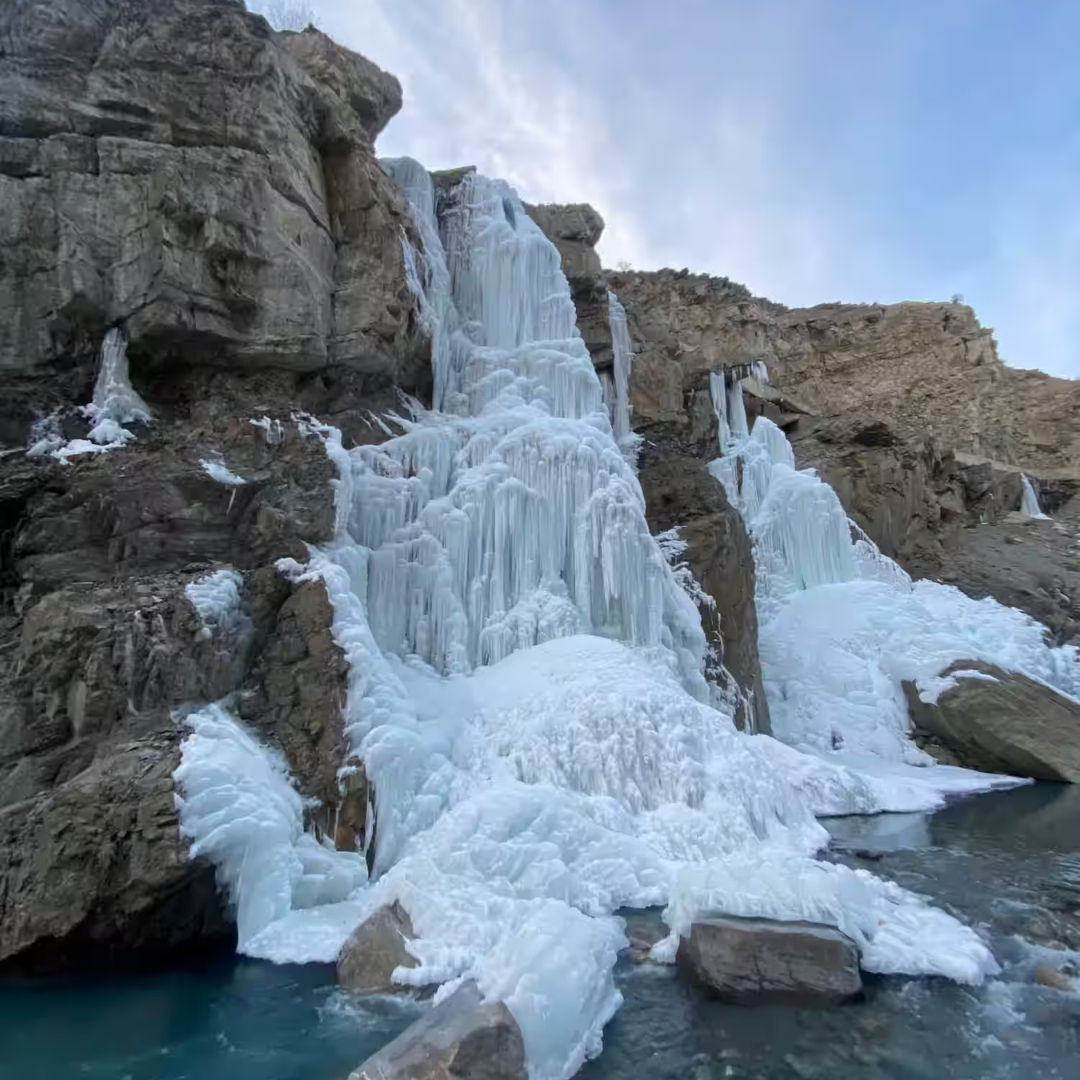
January feels like another planet: quiet lanes, white ridgelines, frozen patches of river and waterfalls turned to ice. Snowfall can block access even on the Kinnaur approach, so buffers are essential. The Manali–Kunzum side and Chandratal are closed. Kibber is part of the wider snow leopard habitat, and winter is a typical tracking season, but sightings are rare and never guaranteed. Homestays and facilities operate on a limited winter footing. Go if you're comfortable with harsh cold and changes; skip if you want easy sightseeing. Serenade's weekly Best of Winter Spiti group trip is scheduled in January.
Spiti in February: frozen valleys and winter culture
February remains extremely cold, with ice, possible fresh snow and short daylight hours. The high pass stays closed; the Shimla–Kinnaur road is the practical approach when clear. Snow leopard interest continues around Kibber, while Losar, the Tibetan New Year, is usually a winter celebration whose date varies by lunar calendar. Respect community rituals rather than treating them as a staged attraction. Go if you want stark landscapes and can tolerate uncertain roads; skip if warmth matters. The weekly winter group batches and private winter options are available subject to conditions.
Spiti in March: snow outside, brighter days ahead
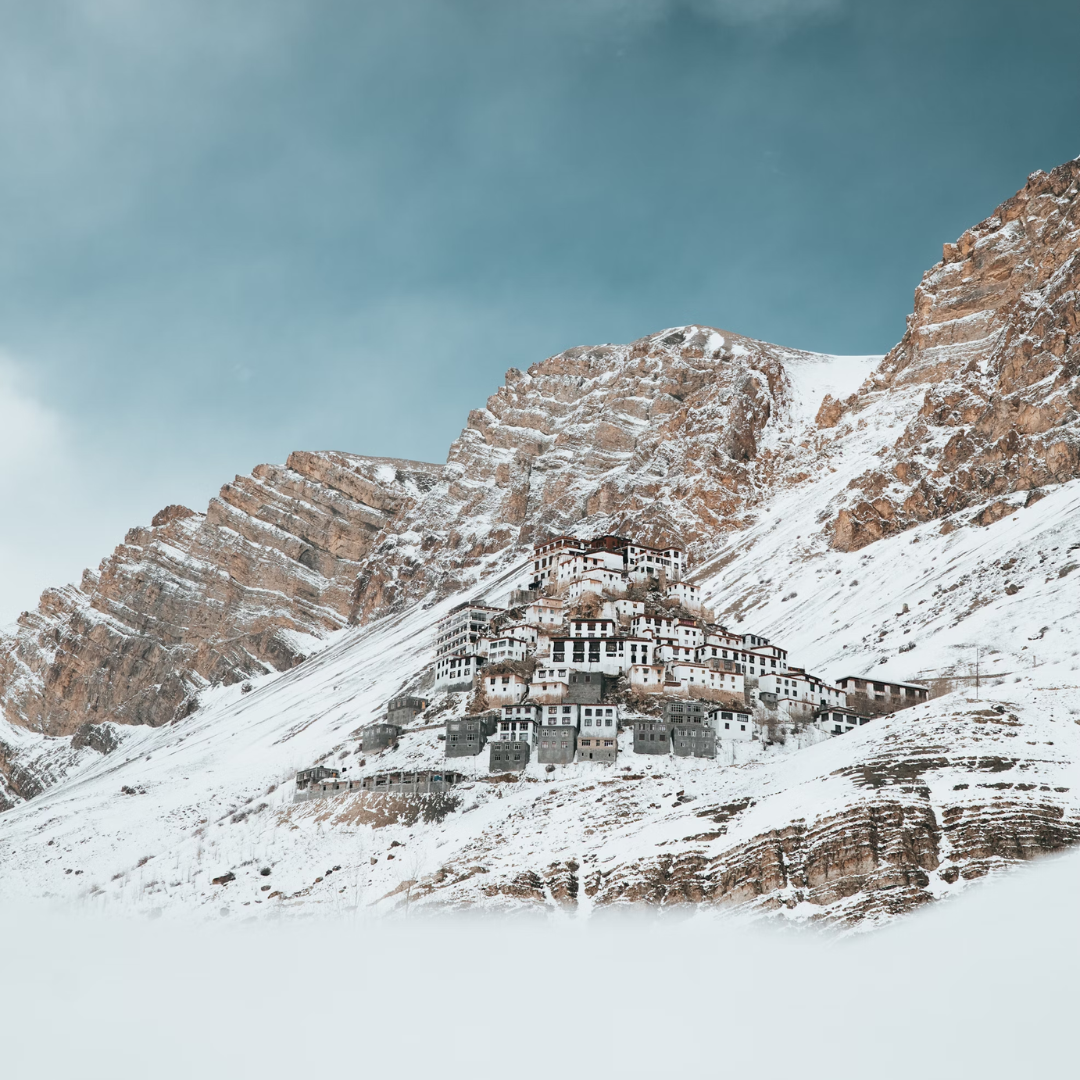
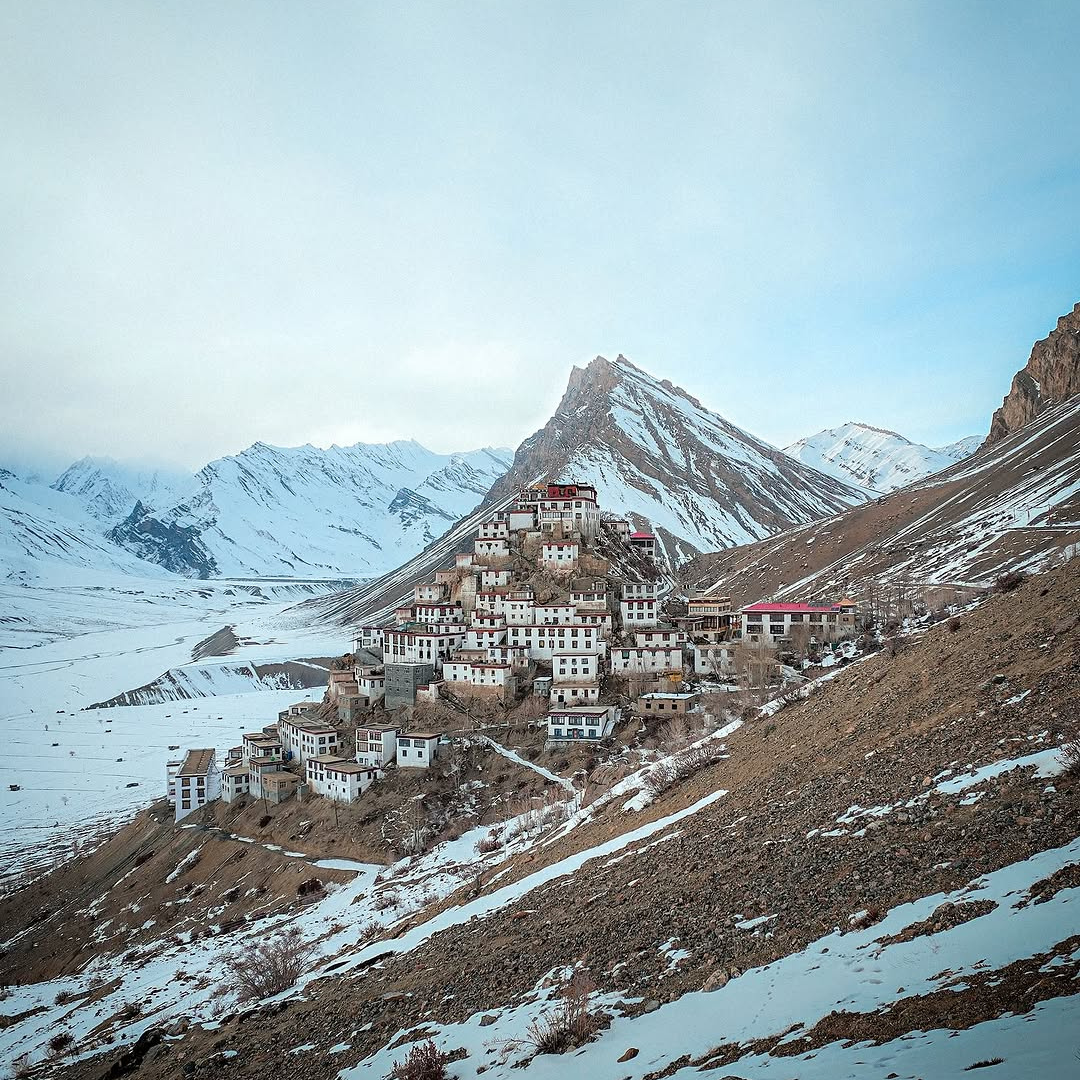
March often brings longer, brighter afternoons, although shaded corners remain icy and nighttime temperatures can plunge. Expect winter-style travel via Kinnaur, not the full Manali loop. Ancient monasteries such as Tabo and Key are atmospheric, but individual access depends on the weather. The contrast of brown cliffs and residual snow makes excellent photographs. Go if you want a quieter cold-desert journey with winter scenery; skip if Chandratal is essential. Serenade's winter group and private itineraries continue through March.
Spiti in April: the beginning of spring
April introduces stronger sunshine and patches of thawing earth, not reliably warm evenings. Snow may remain in the higher villages around Langza, Hikkim and Komic, while the Kunzum route usually remains closed. Conditions near Kinnaur can change as slopes thaw. Pack thermal layers despite the spring label. Go if you prefer smaller crowds and can accept limited high-altitude access; skip if your plan depends on Chandratal camping. Serenade runs the winter group itinerary and offers private departures; private-trip peak dates in April are priced separately on request.
Spiti in May: nearly summer, but not the full circuit
May often feels comfortable in the sun and cold after sunset. Villages become more active and the brown-and-blue Trans-Himalayan scenery returns, yet Kunzum Pass is not reliably open and Chandratal should not be assumed accessible. This is a popular planning trap: pleasant Kaza weather does not equal open mountain passes. Go if you want a Kinnaur-side road trip and some flexibility; skip if you must exit through Manali. Serenade's winter-format group batches run until the end of May 2027, and private options are available through May.
Spiti in June: the gateway to summer
June is often the transition to the full circuit. Snowmelt feeds streams, the mountains regain colour, and road crews work on high sections. The Manali approach and Chandratal may become accessible around this period, but openings and camping depend on actual clearance. June is good for those comfortable with last-minute route adjustments. Go if you can confirm Kunzum and road conditions shortly before departure; skip if you need a guaranteed lake visit. Serenade's listed Summer Spiti with Chandratal weekly batches begin in July 2027, not June.
Spiti in July: the classic full-circuit month
July gives first-timers a strong combination: comparatively pleasant Kaza days, access to villages, monasteries and—when the road is clear—Chandratal. The Key Gompa/Key Monastery festival may fall during the summer festival season; confirm actual dates locally. Rain and landslides on the approach roads still matter even when Spiti itself is dry. Go if you're after the complete loop; skip if you cannot tolerate long, bumpy road days. Serenade's Summer Spiti with Chandratal Lake Saturday batches start 3 July 2027.
Spiti in August: green edges, wet approach roads
Spiti's rain-shadow landscape can remain surprisingly dry while roads through Kinnaur, Kullu and Manali face monsoon rain, landslides and delays. Streams can rise sharply and the Batal–Chandratal approach may be muddy or rough. Monasteries, village walks and high-altitude views are rewarding whenever conditions cooperate. Go if you're flexible and monitoring road alerts; skip if you need a strict return deadline. Serenade's weekly summer group trip is scheduled in August 2027.
Spiti in September: clear views and beautiful light
For many travellers, September is the best month to visit Spiti Valley. Monsoon influence often eases, photographs gain clarity and chilly evenings hint at autumn. Around Kinnaur, apple harvest season typically creates a wonderful roadside atmosphere—enjoy it respectfully and do not enter orchards uninvited. Kunzum and Chandratal are usually still part of the summer circuit, weather permitting. Go if you want photography, stargazing and the loop; skip if you expect warm nights. Serenade's summer group departures are listed through 25 September 2027.
Spiti in October: golden autumn and shifting access
October brings brilliant light, fewer visitors and colder nights. Kinnaur's autumn colours can be spectacular, but early snow may shut the Kunzum section at short notice. Chandratal is not a dependable October plan; access and camps can close as winter arrives. The Shimla–Kinnaur approach is the sensible fallback. Go if you value clear skies and autumn scenery more than checking off a lake; skip if the full circuit is non-negotiable. Serenade's Best of Winter Spiti weekly Saturday batches start in October 2026.
Spiti in November: quiet roads and the winter transition
November feels stark and peaceful: bare trees, snowy horizons, very cold mornings and limited tourist services. Travel is normally via Kinnaur, with the Manali–Kunzum route typically closed or too uncertain to use. Shorter daylight means early starts, and certain village roads may become inaccessible after snow. Go if you like solitude and can travel with winter layers; skip if you want comfortable weather. Serenade's winter group batches continue, and both private cab options are available from November 2026.
Spiti in December: Christmas under Himalayan skies
December is the start of the deep-freeze experience: snow is possible, village nights are bitterly cold and water can freeze in pipes. Spiti in New Year or a Christmas trip to Spiti means a winter road journey through Shimla and Kinnaur—not Chandratal or Manali via Kunzum. Road closures remain possible even on this approach. Go if you want a genuine cold-weather adventure and have warm clothing; skip if you expect guaranteed snowfall. Serenade's peak Christmas/New Year Best of Winter Spiti group batches start between 19 and 28 December 2026.
Spiti Valley in Summer (June–September)
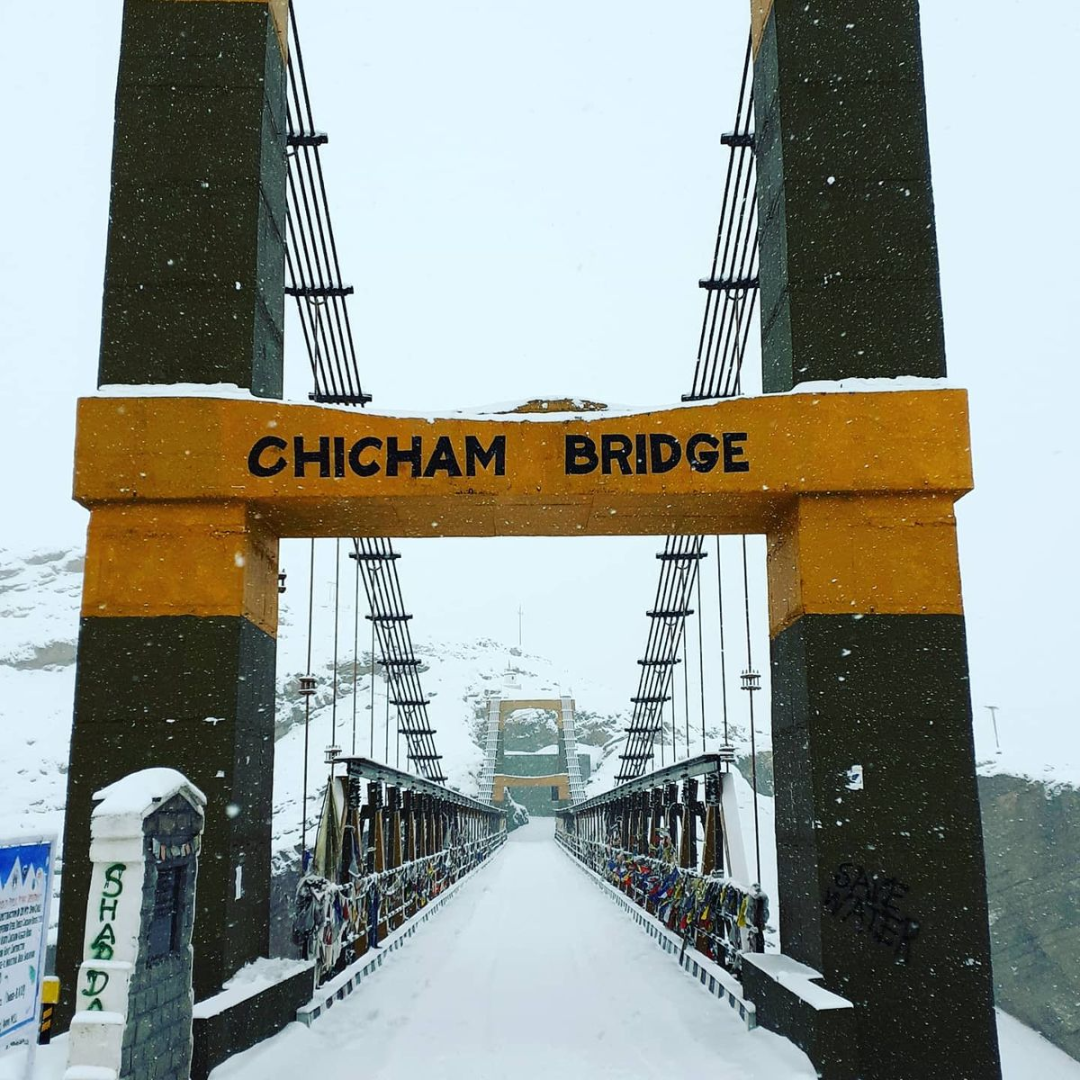
For a first visit, Spiti Valley in summer is the easiest season to understand: monasteries, cafes and accommodation are more active, and the full circuit becomes possible once Kunzum opens. A summer Spiti trip can combine Sangla and Chitkul with Tabo, Dhankar, Kaza, Langza, Komic, Hikkim, Key Monastery, Chicham Bridge and the Chandratal area.
Our trip captains recommend taking the Kinnaur approach first when possible: the journey's gradual elevation gain is better for acclimatisation than rushing straight towards high-altitude villages. Don't confuse a sunny afternoon with low altitude; headaches and fatigue can still be warning signs of acute mountain sickness (AMS). Rest, hydrate normally, avoid heavy exertion on arrival, and descend and seek medical help if symptoms worsen. Supplemental oxygen is not a substitute for descent or medical care.
Read our reasons to visit Spiti in summer and the summer Chandratal group tour itinerary.
Spiti Valley in Monsoon: Is It Safe?
Spiti Valley in monsoon needs a nuanced answer. Kaza sits in a rain-shadow region, but getting there means crossing sections of Himachal that can receive heavy rain. Landslides, falling rocks, flooded crossings and disrupted transport are the real challenges in July and August.
Never drive across a fast-flowing stream or through a freshly blocked road. Leave a spare day after your return, favour daylight travel and follow official warnings. A group tour helps with coordination, but it cannot cancel weather risk. Check live road and weather advisories repeatedly—not just when you book.
Spiti in Autumn (October–November)
Autumn suits travellers who want silence, clear-looking skies and photography without peak summer crowds. October is a transition month, not a guaranteed extension of the summer circuit. November is much closer to winter; choose the Kinnaur approach and be prepared for significant cold. Pack a warm jacket, thermal layers, gloves and a power bank. In Kinnaur, apple harvesting is typically an autumn highlight.
For planning beyond the seasons, see our complete Spiti Valley travel guide.
Spiti Valley in Winter (December–March)
A winter Spiti trip is a road expedition through a living Himalayan landscape, not a ski resort holiday. Frozen waterfalls, white fields, the ancient lanes of Tabo and the views around Kibber and Chicham Bridge are the appeal. On our winter batches, we usually plan around the Kinnaur approach and leave sightseeing subject to road safety. The Lingti frozen waterfall is a scheduled highlight of the Best of Winter Spiti group route, when accessible.
Serenade's group trips carry an oxygen cylinder, oximeter and basic medicines, along with an experienced trip captain. That preparation matters, but it does not eliminate altitude risks. Discuss medical concerns with your doctor before booking; winter group trips are recommended for ages 18–36 in good health. Expect basic infrastructure and very cold nights, around −15°C to −20°C on the published group itinerary.
See the best winter places to visit in Spiti and our winter Spiti itinerary from Delhi.
Spiti in Spring (April–May)
April and May offer longer days, retreating snow and less crowded roads, but don't book a Chandratal night based on Kaza's temperature. The high pass may remain blocked well into the season. If your dream is the full loop, wait for verified Kunzum access. If you're happy to enter and exit via Kinnaur, spring makes an appealing compromise between winter atmosphere and gentler sunshine.
Essential high-altitude tips for every season
- Altitude: Give yourself time to acclimatise, especially before sleeping high or visiting Komic and Chandratal. Know AMS warning signs and never push through worsening symptoms.
- Mobile network: Postpaid BSNL and Jio are often the most useful options in parts of the valley, but signal varies dramatically and cannot be guaranteed. Download offline maps.
- Cash and ATMs: Carry sufficient ₹ cash from Shimla/Kinnaur or Kaza; ATMs may be offline or empty. Don't rely on UPI everywhere.
- Clothing: Pack a windproof outer layer even in July; winter requires serious insulated layers, waterproof boots, gloves and a warm cap.
- Flexibility: Keep important medicines, identity documents, snacks, water and a spare travel day. Check road status daily during volatile weather.
Best Time for Specific Spiti Travel Goals
Best time to see snow in Spiti
January–February is typically strongest for deep-winter scenes and the possibility of Spiti Valley snowfall. Snow is never guaranteed on a specific date. December and March can also look wintry; October may bring isolated early snow, not a reliable snow holiday.
Best time to visit Chandratal Lake
July–September is the most dependable planning window once the seasonal road opens. June is conditional; October is risky. The lake is not accessible as a conventional road-trip stop in winter. See our Chandratal Lake travel guide.
Spiti bike trip best time
For a Spiti Valley road trip on a motorcycle, generally aim for July–September, after confirming Kunzum and stream-crossing conditions. Even in summer, broken surfaces, altitude and changeable weather demand experience, protective gear and realistic daily distances. Avoid treating a mountain pass as a speed challenge.
Best time for photography and stargazing
September–October often offers crisp mountain views and strong autumn light. Clear winter nights can be stunning too, but standing outside in sub-zero temperatures takes preparation. For stargazing, choose moonless nights, sheltered accommodation and safe access rather than isolated roads after dark.
Best time for a budget trip
A Spiti budget trip may be easier to arrange outside peak holiday windows, but availability and road access matter more than chasing a low fare. Sharing a group vehicle and room can reduce your Spiti Valley trip cost; always compare inclusions rather than headline prices alone.
Spiti Valley for first timers
Choose July–September, preferably through Shimla and Kinnaur before exiting towards Manali when conditions permit. It gives a better chance of the full experience without the extreme cold of winter. First-timers should still plan for AMS, remote services and long road days.
Best time for couples and honeymoon trips
Choose September for comfortable daytime exploration and clear views, or a customised private winter trip if you're both genuinely excited by the cold. A private cab lets you choose dates, stays and pace. Don't confuse a romantic snow photograph with an easy winter journey.
Best time for families
July–September is generally more practical for families than deep winter. Even then, long drives, steep roads and altitude deserve attention. Children, older travellers and anyone with health concerns should seek individual medical advice before travel. A private route can be adapted to the group's pace.
Spiti for New Year or Christmas
A winter Spiti trip from Delhi is an adventurous alternative to crowded hill stations. Expect freezing temperatures, the Shimla–Kinnaur route and weather-led sightseeing. Serenade's peak group departures start between 19 and 28 December 2026, with separate holiday pricing listed below.
Upcoming Serenade Travels Spiti Trips (2026–27)
Whether you want a Spiti Valley group trip, a Spiti group tour 2026 winter departure or a private Spiti Valley tour package from Delhi, these are the published options. Our group sizes are 12–16 travellers, with a trip captain on group departures. Private itineraries can be customised for dates, stays and route.
1. Best of Winter Spiti — Group Trip
Type: Group · Duration: 6 Nights 7 Days from Shimla; Delhi–Delhi with overnight Volvo (around 9 calendar dates door to door). Batches: Weekly Saturday starts, October 2026–end of May 2027; peak starts between 19–28 December 2026.
Route highlights: Shimla, Kinnaur Gate, Sangla/Chitkul, Nako/Khab Sangam, Gue Monastery, Tabo, Dhankar, Kaza (3 nights) with Hikkim, Langza, Komic, Key Monastery, Chicham Bridge and Kibber, Lingti frozen waterfall, Kalpa. Return via Shimla. A road trip with no trekking; excludes Chandratal and the winter-closed Manali route.
From ₹18,499/person triple or ₹19,499 double sharing, Delhi–Delhi. Peak: ₹21,999 triple / ₹23,999 double. Includes return Volvo, Tempo Traveller/SUV, six nights' stays, breakfast and dinner, trip captain, oxygen and medical kit. Recommended for ages 18–36 in good health.
2. Summer Spiti with Chandratal Lake — Group Trip
Type: Group · Duration: 6 Nights 7 Days, Delhi–Delhi. Batches: Weekly Saturdays, 3 July–25 September 2027.
Route highlights: Delhi, Shimla, Sangla/Chitkul, Tabo, Dhankar, Kaza, Langza, Komic, Hikkim, Key Monastery, Chicham Bridge, Chandratal Lake (Swiss camps), Atal Tunnel, Manali and Delhi. This is the full circuit, entering via Kinnaur and exiting through Manali.
Delhi–Delhi: ₹18,499 triple / ₹19,499 double. Shimla–Manali: ₹16,499 triple / ₹17,499 double. Includes Volvo, six nights' stays including Swiss camping at Chandratal/Batal, breakfast and dinner, trip captain, oxygen cylinder and oximeter.
Explore Summer Spiti with Chandratal Lake
3. Best Winter Escape to Spiti Valley — Private Cab Trip
Type: Private · Duration: 5 Nights 6 Days, Delhi–Delhi (Volvo to Shimla, then private cab). Dates: Your choice, November 2026–May 2027.
Route highlights: Shimla, Kalpa, Nako, Tabo, Dhankar, Kaza sightseeing day, Chitkul and back to Shimla. Ideal for couples, families or friends who want their own vehicle.
Per person from: ₹16,999 (5 travellers) · ₹17,999 (4) · ₹19,999 (3) · ₹24,999 (2). Peak periods 15 Dec–5 Jan and 10 Apr–30 Jun are priced separately on request.
Explore Best Winter Escape to Spiti Valley
4. Winter Spiti Valley — Private Cab Trip
Type: Private · Duration: 6 Nights 7 Days, Delhi–Delhi. Dates: Your choice, November 2026–May 2027.
Route highlights: Shimla, Kalpa, Nako, Tabo, Dhankar, Kaza (2 nights), Kalpa, Sangla, Chitkul and return to Shimla. Compared with the shorter private escape, this offers a slower pace.
Per person from: ₹18,999 (5 travellers) · ₹20,999 (4) · ₹22,999 (3) · ₹27,999 (2). Peak periods 15 Dec–5 Jan and 10 Apr–30 Jun are priced separately on request.
Explore Winter Spiti Valley Private Cab
| Trip | Format | Duration | Departure window | Starting price per person | Main draw |
|---|---|---|---|---|---|
| Best of Winter Spiti | Group | 6N/7D from Shimla | Oct 2026–May 2027, Saturdays | ₹18,499, triple sharing Delhi–Delhi | Winter villages and frozen waterfall |
| Summer Spiti with Chandratal | Group | 6N/7D | 3 Jul–25 Sep 2027, Saturdays | ₹16,499, triple sharing Shimla–Manali | Full circuit and Chandratal |
| Best Winter Escape | Private | 5N/6D | Nov 2026–May 2027 | ₹16,999, 5 travellers | Shorter customised escape |
| Winter Spiti Valley | Private | 6N/7D | Nov 2026–May 2027 | ₹18,999, 5 travellers | Slower private itinerary |
Booking note: Group trips are confirmed with a ₹8,000 advance. Prices can change; check the trip page or WhatsApp for live availability. You can also explore all Spiti Valley departures, upcoming group trips or personalised private trips.
What to Pack for Spiti by Season
| Season | Essential checklist | Don't forget |
|---|---|---|
| Summer (Jun–Sep) | Fleece, windproof jacket, quick-dry clothes, sturdy shoes, sunglasses, sunscreen | Rain protection for approach roads; refillable bottle |
| Monsoon approaches (Jul–Aug) | Waterproof shell, grip-soled shoes, waterproof bag cover | Offline maps, flexible onward tickets |
| Autumn (Oct–Nov) | Thermals, down jacket, gloves, warm socks, moisturiser | Power bank; earlier daily starts |
| Winter (Dec–Mar) | Heavy insulated jacket, thermal base layers, warm boots, balaclava, woollen cap, gloves | Spare socks, lip balm, personal medicines |
| Spring (Apr–May) | Layered fleece, thermals, waterproof footwear, sunglasses | Winter-ready jacket for cold nights |
So, When Should You Book Your Spiti Adventure?
The best time to visit Spiti Valley depends on the story you want to bring home. Choose July–September for your first full circuit and Chandratal; September–October for crisp photography and autumn light; January–February for real winter atmosphere; or April–May for a Kinnaur-side journey with snow remnants. Road access, especially over Kunzum La, is always weather-dependent.
For a Spiti Valley trip from Delhi, explore Best of Winter Spiti, Summer Spiti with Chandratal Lake, Best Winter Escape private cab or Winter Spiti Valley private cab.
Budgeting your trip? Our Spiti Valley trip cost breakdown compares DIY, group and private options season by season, so you can match your month to your budget.
Ready to plan your trip? WhatsApp Serenade Travels at +91 86905 02310 or email serenadetravels@gmail.com. Tell us your month, travel style and group size—we'll help you choose a departure that fits.