

Winter Ladakh travel guide 2026: frozen Pangong Tso, the Chadar trek across the Zanskar, snow-wrapped monasteries, and stargazing at Hanle's Dark Sky Reserve.
Most people plan their Ladakh trip for July, when the roads are open and the passes are clear. But swap the summer crowds for sub-zero mornings and you get an entirely different Ladakh — one where the lakes turn to glass, the rivers freeze into walkable ice sheets, and the silence stretches for miles in every direction. If you're weighing whether winter is the best time to visit Ladakh for your next trip, here's what actually happens on the ground between December and February, and how to plan around it.
A Landscape That Goes Completely Still
Between December and February, Ladakh empties out. The tourist buses are gone, the homestays quiet down to a handful of regulars, and the high desert settles into a kind of stillness that's hard to describe until you've stood in it. Snow dusts the brown mountains in uneven patches, the Indus slows to a crawl at its edges, and even Leh's usually busy main bazaar thins out to a trickle of shopkeepers keeping their stalls open out of habit more than expectation. Daytime temperatures hover a few degrees above freezing under a sky so clear it looks unreal; nights regularly drop below −15°C. It isn't a comfortable season, but it is an honest one — this is Ladakh with nothing performed for tourists, just the land, the cold, and an enormous, close sky.
Pangong Tso Turns to Glass

The lake most visitors know from a hundred road-trip photos looks nothing like itself in January. A frozen Pangong Lake is one of the strangest sights in the Himalayas — an entire 130-kilometre saline lake sealed under ice thick enough, in the coldest stretches, to walk on near the shore. The blue is gone, replaced by a pale, cracked white that shifts colour with the light through the day. Getting there in winter means a longer, colder version of the same drive from Leh over Chang La, and the lake itself is considerably less forgiving than its summer self — but for photographers, or anyone who's already seen Pangong in July, watching it frozen solid is close to seeing a different lake entirely.
The Chadar Trek: Walking the Zanskar's Frozen Spine

No winter Ladakh experience is more famous, or more demanding, than the Chadar trek. When the Zanskar River freezes over in the gorge below Chilling, it forms a shifting ice sheet — the 'chadar', or sheet — that becomes the only route in or out of the Zanskar valley for weeks at a time, since the road over Pensi La is buried in snow. Trekkers walk directly on the river ice for several days, past frozen waterfalls, sheer canyon walls, and campsites in caves along the bank, with the ice groaning and cracking underfoot the whole way. It isn't a trip to book casually — the route shifts year to year depending on how solid the freeze is, and it needs a registered local operator, proper cold-weather gear, and real acclimatisation. But for trekkers chasing something genuinely rare, the Chadar trek in Ladakh remains one of the most extraordinary winter routes anywhere in the world.
The road version of this same valley is a lot more forgiving — our Zanskar Bike Trip runs through Padum and Gumbok Rangan once the summer roads reopen.
Ice Hockey, Skating, and a Frozen Leh Afternoon
Winter in Leh has its own small rituals. The Karzoo pond and a handful of other spots around town freeze solid enough for locals to lace up skates and play makeshift ice hockey most afternoons — a tradition that's grown into an informal winter league over the years, and one of the more unexpectedly fun things to watch, or join, if you're in town in January. It's a good reminder that winter Ladakh isn't only about extreme treks; some of the best moments are as simple as a pickup hockey game with a flask of butter tea in hand, the Stok Kangri range lit gold behind the players.
Monasteries Under Snow, and the Festivals Inside Them
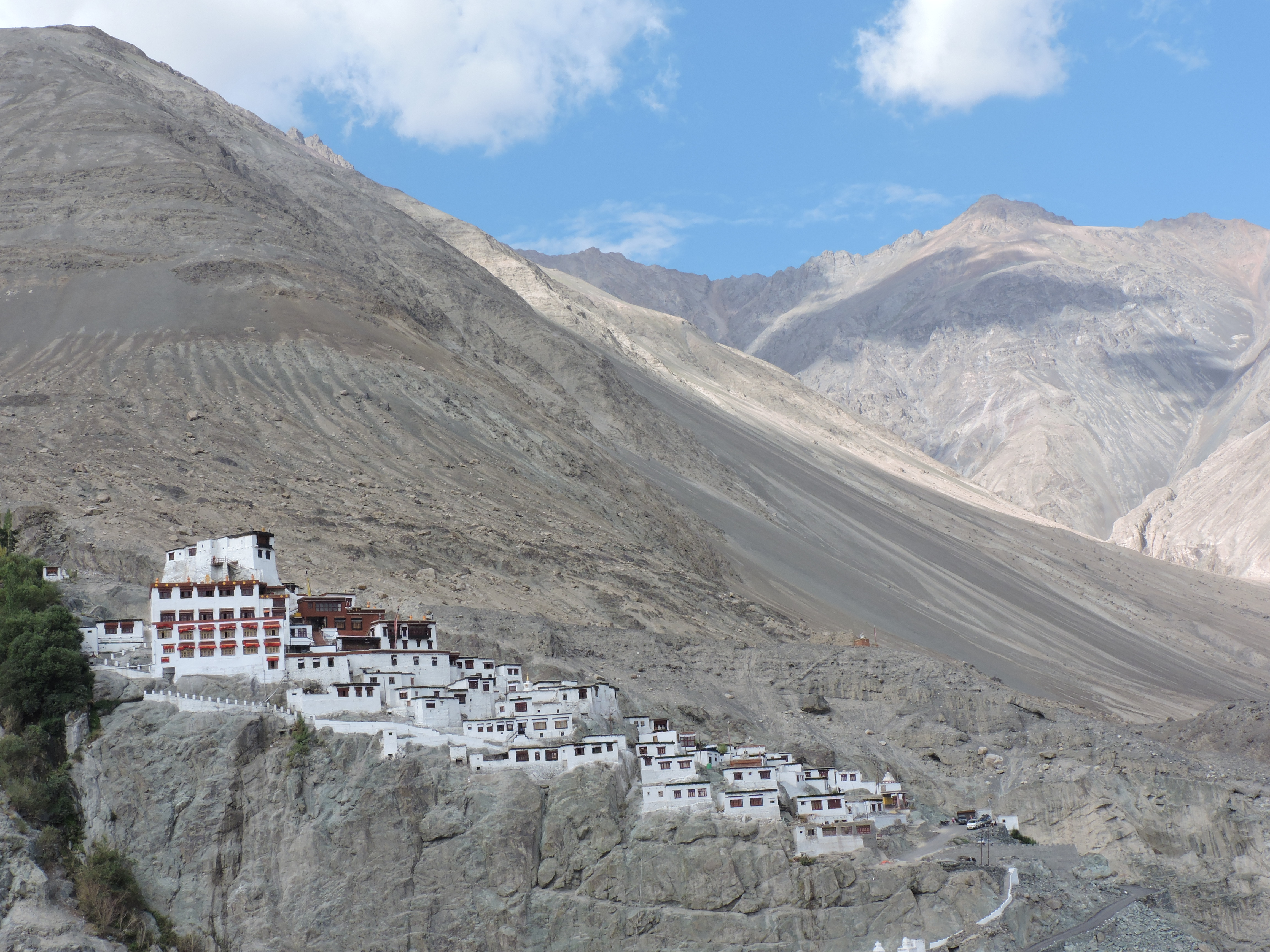
Ladakh's monasteries look different against snow. Hemis, Thiksey, and Diskit — three of the region's most recognisable gompas — sit on their usual dramatic clifftop and hilltop perches, but in winter their whitewashed walls and prayer flags stand out against a backdrop that's genuinely white rather than brown. This is also festival season inside monastery walls. Losar, the Ladakhi New Year, falls in December and is celebrated with archery contests, family visits, and the region's best home-cooked food; Dosmoche, the 'festival of the scapegoat', follows in February with masked Cham dances performed by monks in Leh and Diskit, driving out the old year's evil spirits ahead of spring. Neither festival is built for tourists, which is exactly what makes catching one worthwhile if your dates happen to line up.
Snow Leopard Country
Winter is also, somewhat counterintuitively, the best season to actually see a snow leopard in Ladakh. As snow pushes blue sheep and ibex down from the high ridgelines into lower valleys, the leopards that hunt them follow — and villages like Ulley and Rumbak, along with the buffer zones of Hemis National Park, become genuine hotspots for sightings between January and March. It takes patience, warm layers, and usually a few dawn-to-dusk days scanning ridgelines with a local spotter, but Ladakh's winter snow leopard treks have quietly become one of the most sought-after wildlife experiences in India, precisely because sightings are far from guaranteed anywhere else on the planet.
Ladakh has recently taken this further — see our writeup on India's first high-altitude wildlife safari, approved for exactly this snow leopard territory.
Stargazing at Hanle's Dark Sky Reserve

If one experience sums up why winter Ladakh feels otherworldly, it's a clear night at Hanle. Sitting above 4,500 metres on the remote Changthang plateau, Hanle was declared India's first Dark Sky Reserve in 2022, and on a moonless winter night the reasons are obvious the moment you step outside — the Milky Way stretches from horizon to horizon, visible without a telescope, in a way that's genuinely rare anywhere else on the subcontinent. Winter's thin, dry, pollution-free air makes the sky even sharper than in summer, though it comes with the tradeoff of standing in sub-zero temperatures for the best views. Bring every layer you own, and it will still be worth it.
Best Time to Visit Ladakh in Winter
- Early-to-mid December — Losar celebrations, the first hard freezes, Pangong beginning to ice over
- Late December to mid-February — peak winter: prime Chadar trek season, a fully frozen Pangong Tso, the best snow leopard sightings, and the clearest, coldest skies at Hanle
- Late February to March — Dosmoche festival, the Chadar ice starting to thin, days growing noticeably milder
If you're timing a Ladakh winter tour package around one specific highlight, mid-January is usually the sweet spot — cold enough for a reliable Chadar freeze and a fully iced-over Pangong, but past the most unpredictable early-winter stretch.
What to Pack for a Ladakh Winter Trip
- Down jacket rated for −20°C or colder, plus a windproof outer shell
- Thermal base layers (top and bottom) — at least two sets to rotate
- Insulated, waterproof trekking boots with good grip for icy ground
- Wool socks, glove liners plus outer gloves, and a warm hat covering the ears
- Sunglasses or snow goggles — glare off snow and ice is intense
- Power bank and a spare phone battery — cold drains batteries fast
- Personal medication, basic first-aid, and any AMS medicine prescribed for altitude
- Cash in small denominations — card machines are unreliable in remote villages
Planning Your Winter Ladakh Trip
Winter Ladakh isn't a trip to piece together last-minute. Permits, road conditions, and even which villages are reachable can change week to week once the snow sets in, which is why most travellers doing the Chadar trek or a winter Pangong run book through an established local operator rather than going independently. A well-structured Ladakh winter tour package solves this by design: fixed acclimatisation days, a support vehicle, someone who already knows which stretch of ice is safe this week — that guided structure matters more here than on almost any other Indian winter trip.
Ladakh's summer circuit is where Serenade Travels currently runs its own fixed group departures — if the frozen Pangong and the Chadar trek have you dreaming of the region but you'd rather experience it on two wheels once the passes reopen, explore our Ladakh bike trip through Nubra, Turtuk, and Pangong, or go further with our Umling La expedition to the highest motorable road on earth. Both routes cover the same Changthang landscape this guide describes in winter, just under a very different sky.
Ready to Experience It?
Ladakh Bike Trip
Join a group departure with Serenade Travels — all logistics handled, experienced trip leader included.
View Ladakh Bike Trip →Ready to Experience It?
Ladakh with Umling La
Join a group departure with Serenade Travels — all logistics handled, experienced trip leader included.
View Umling La Expedition →Final Thoughts
Winter Ladakh asks more of you than the summer version does — more layers, more planning, more patience with a landscape that doesn't care about your itinerary. In exchange, it hands you a frozen lake that looks like nothing else on earth, a river you can walk across, monasteries wrapped in snow and prayer flags, and a night sky that makes the rest of the year's stargazing look dim by comparison. If that trade sounds worth making, a good Ladakh winter tour package is the difference between a trip you white-knuckle through and one you actually enjoy — so pack like you mean it, and book with people who know the ice.


