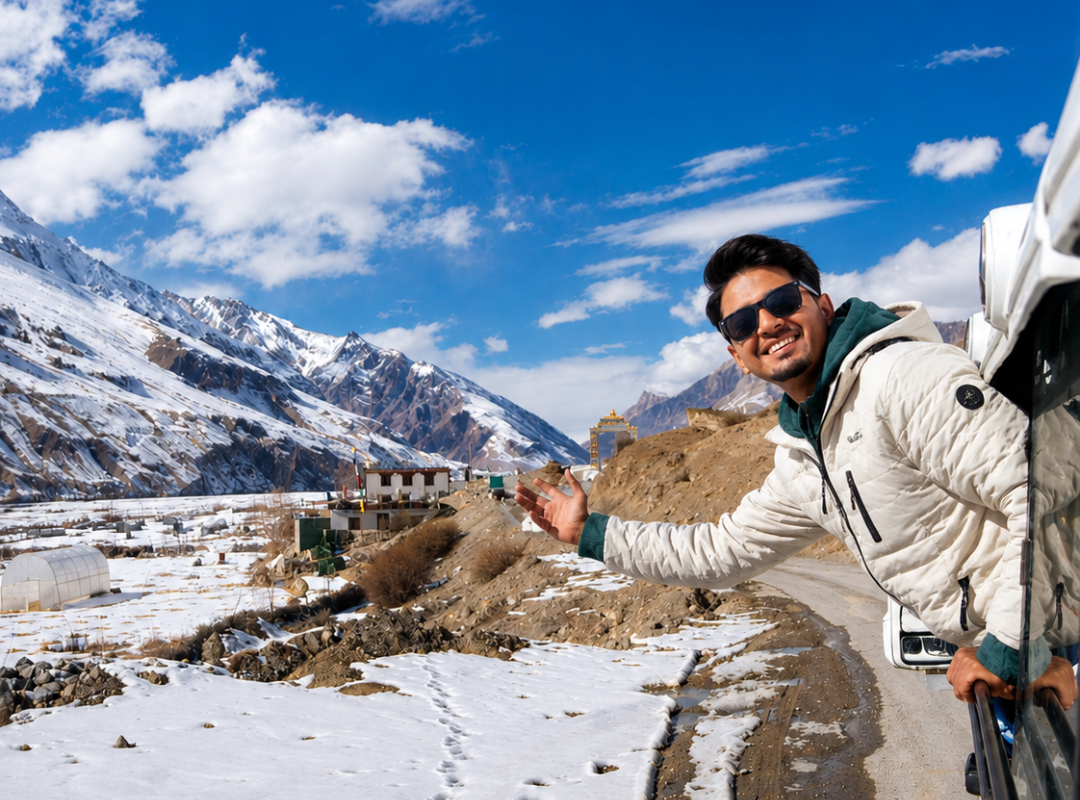
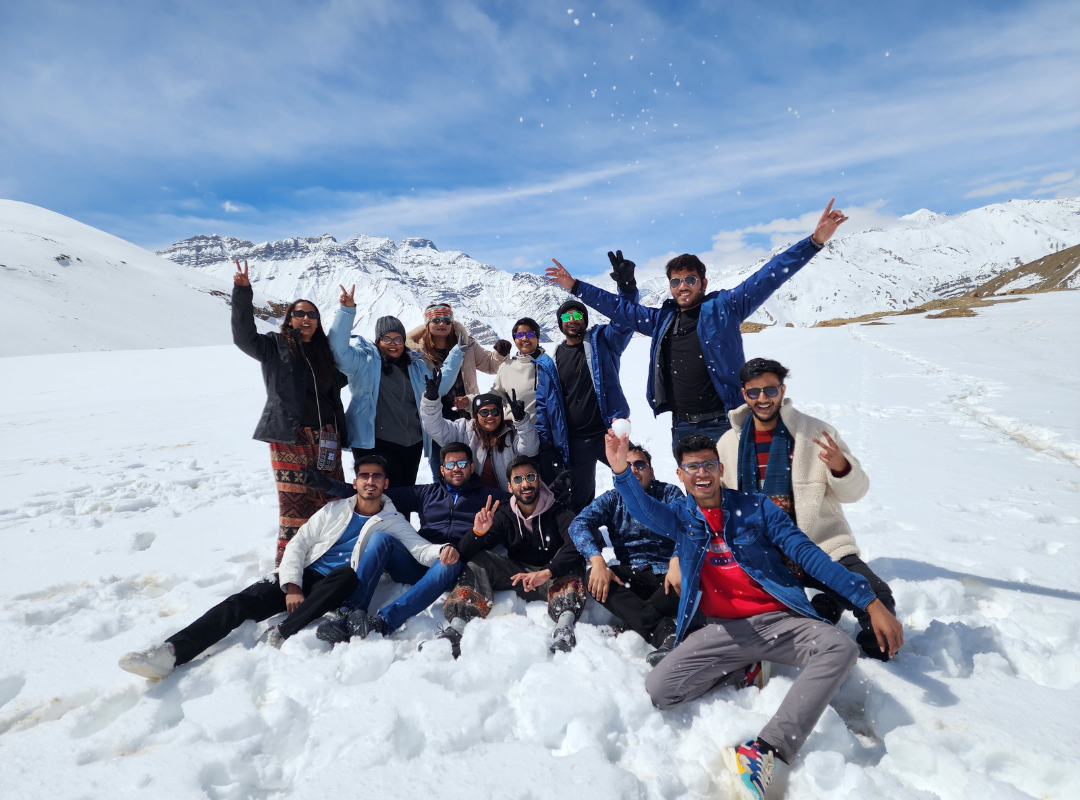
Spiti Valley in winter is not a destination for the faint-hearted — and that is exactly what makes it extraordinary. When the rest of India is booking beach holidays and city breaks, a small tribe of travellers makes its way into the frozen heart of the Himalayas, where temperatures plunge to -20°C, snow covers everything in sight, roads disappear under metres of ice, and ancient monasteries sit in absolute silence against a backdrop of white peaks and cobalt skies.
For month-wise snow and road conditions, read the best time to visit Spiti Valley guide, and see the Spiti Valley trip cost breakdown before you plan your winter trip.
This is Winter Spiti — and if you've been looking for the most raw, most real, most unforgettable Himalayan experience available, you've found it.
This guide covers every major attraction in Spiti Valley in winter, what to expect, how to reach, when to go, and the Serenade Travels Winter Spiti packages that have already taken thousands of travellers safely into this frozen land.
Best time to visit Spiti Valley in winter: December to February for extreme winter. October–November and March for shoulder season with less harsh conditions but still plenty of snow.
Why Visit Spiti Valley in Winter?
Summer Spiti (June–September) is popular and beautiful. But Winter Spiti is a completely different world:
- 🏔️ Snow on everything — monasteries, villages, passes, and river valleys all covered in white
- ❄️ Frozen waterfalls — Lingti Waterfall freezes into a spectacular wall of ice
- 🌌 Stargazing at its best — zero light pollution, minus any cloud cover, and the Milky Way visible to the naked eye
- 🏘️ Authentic Spitian life — in winter, only locals remain; you experience the real culture, not the tourist version
- 📸 Unmatched photography — snow-draped Key Monastery, frozen Nako Lake, the icy Spiti River
- 🧘 True solitude — passes are closed to regular traffic; you feel like the last person on Earth
- 💰 Lower hotel rates — off-season pricing means far better value
- 🐺 Snow Leopard sightings — winter is peak snow leopard season in Spiti; the best time to spot this elusive big cat
The trade-off? It is genuinely extreme. Temperatures of -15°C to -20°C in Kaza, roads that require experienced drivers, and altitude that demands respect. But every single discomfort is worth it.
Want a ready-made Spiti Valley itinerary?
Tell us a few details — we'll send free pricing and dates.
Top Places to Visit in Spiti Valley in Winter
1. Kalpa — Gateway to the Kinnaur Kailash
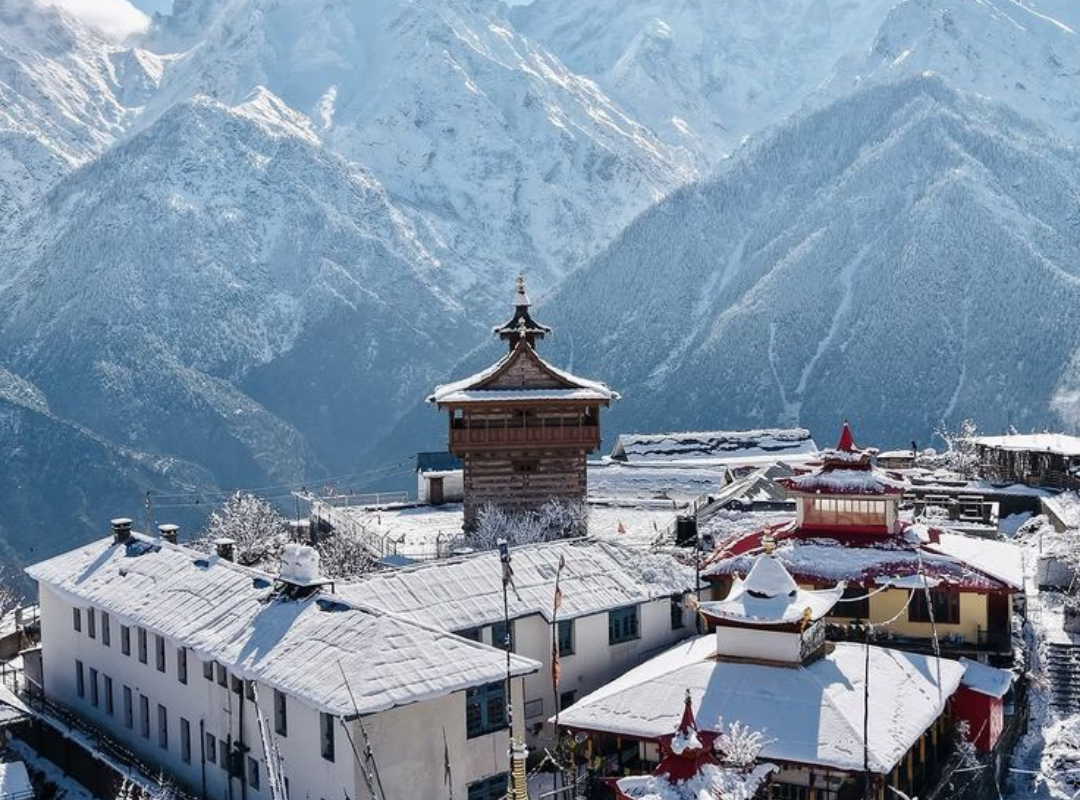
Kalpa is the first major stop on the Spiti circuit coming from Shimla, and in winter it offers some of the most dramatic mountain scenery in all of Himachal Pradesh. Perched on a ridge above Reckong Peo at around 2,960 m, Kalpa is famous for its jaw-dropping views of the Kinner Kailash mountain range — a series of sacred peaks that the Kinnauri people consider the winter home of Lord Shiva.
What makes Kalpa magical in winter:
- Snow-covered Kinner Kailash peaks glowing pink and orange at sunrise — a sight that will stop you mid-breakfast
- Kalpa's traditional Kinnauri wooden houses with their carved balconies dusted in snow
- The famous "Suicide Point" viewpoint — not as scary as it sounds, but the sheer drop and mountain panorama are breathtaking
- Apple orchards bare in winter, creating a beautiful skeletal landscape against the snow
- The drive from Reckong Peo up to Kalpa is itself a highlight — hairpin bends with ever-improving views
Altitude: ~2,960 m. Distance from Shimla: ~235 km (~7–8 hours).
2. Sangla Village — The Baspa Valley Beauty
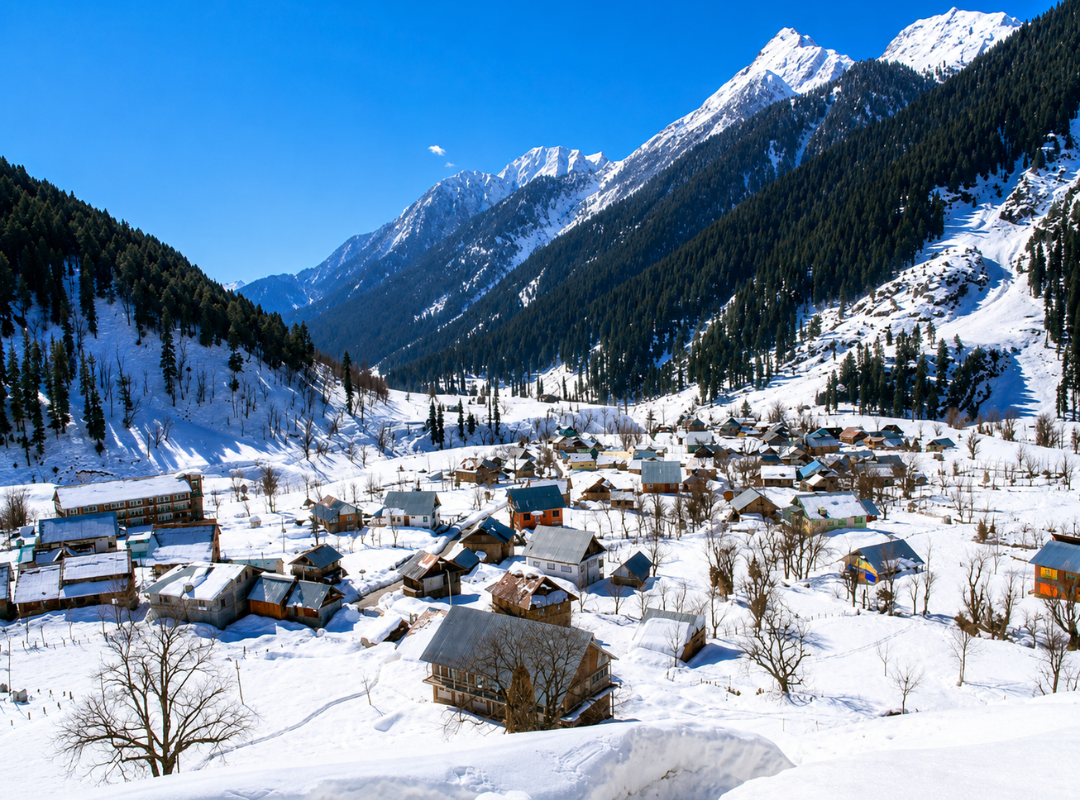
Sangla sits at the head of the Baspa Valley, a lush side valley of Kinnaur that transforms completely in winter. While summers bring apple blossom and green terraced fields, winter Sangla becomes a study in stillness — white fields, frozen Baspa River, and a silence so complete you can hear snow falling.
Winter highlights:
- The Baspa River, partially frozen, running through a white valley — extraordinary photography
- Traditional Kinnauri architecture — stone and wood houses with prayer flags flapping in the cold
- The drive from Reckong Peo to Sangla follows the Sutlej gorge before climbing into the Baspa Valley — dramatic at any time of year, stunning under snow
- Sangla Meadows in winter become a perfect white expanse backed by forested slopes
Note: Sangla is the gateway to Chitkul, India's last village before the Tibet border.
Altitude: ~2,680 m. Distance from Kalpa: ~35 km.
3. Chitkul — India's Last Village in the Snow
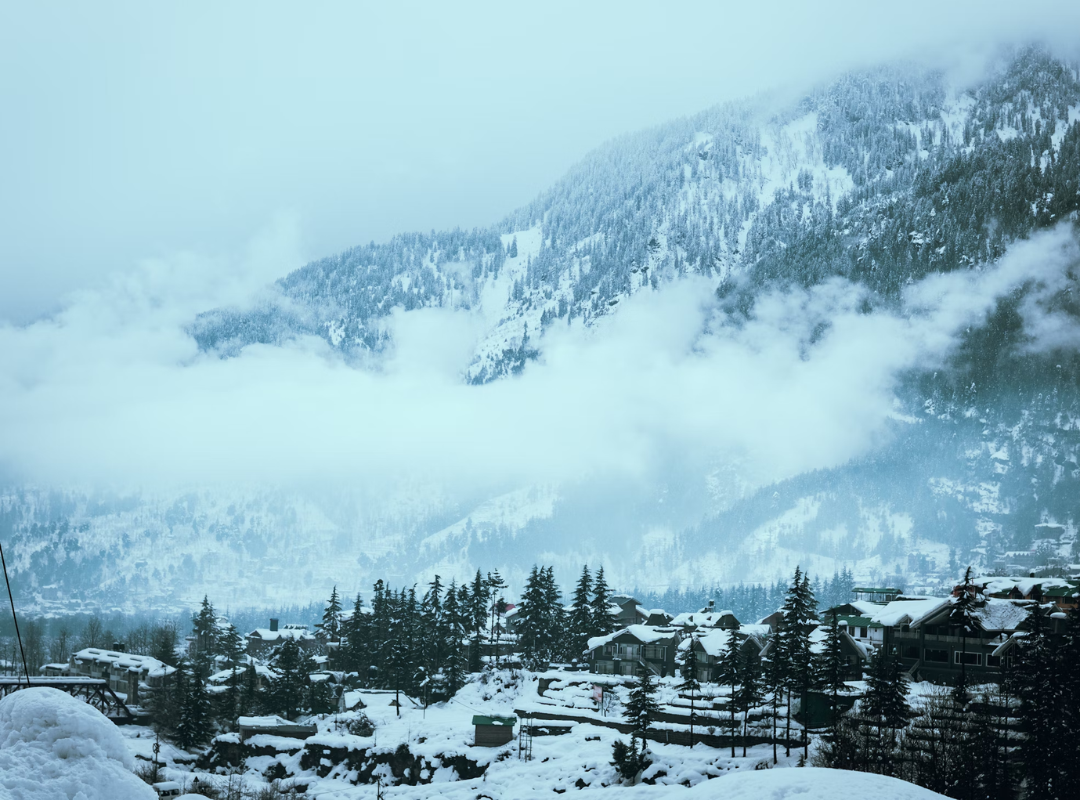
Chitkul is one of those places that catches you completely off guard. Officially India's last inhabited village before the Indo-Tibet border, this tiny settlement of wooden houses, prayer flags, and ancient temples sits at 3,450 m in the Baspa Valley. In winter, with almost no tourists and the village buried in snow, it is profoundly beautiful.
Why Chitkul is unmissable in winter:
- The famous "Hindustan Ka Aakhri Dhaba" — the last tea shop before Tibet — still operating in winter with local families serving simple, soul-warming food
- The Chitkul Temple (dedicated to the local deity Mathi) — a beautifully carved wooden structure draped in snow
- The Baspa River below the village — frozen solid in January and February
- Snow-covered rooftops, wooden balconies, and prayer flags against white peaks — one of the most photographed winter scenes in Himachal
- The absolute silence — in winter, with roads closed and tourists absent, Chitkul is perhaps the quietest place in India
Important note: In deep winter (January–February), the road to Chitkul from Sangla can be blocked by snow and requires a 4WD vehicle with chains. Always check conditions before proceeding.
Altitude: ~3,450 m. Distance from Sangla: ~20 km.
4. Nako Lake — A Frozen Mirror at High Altitude
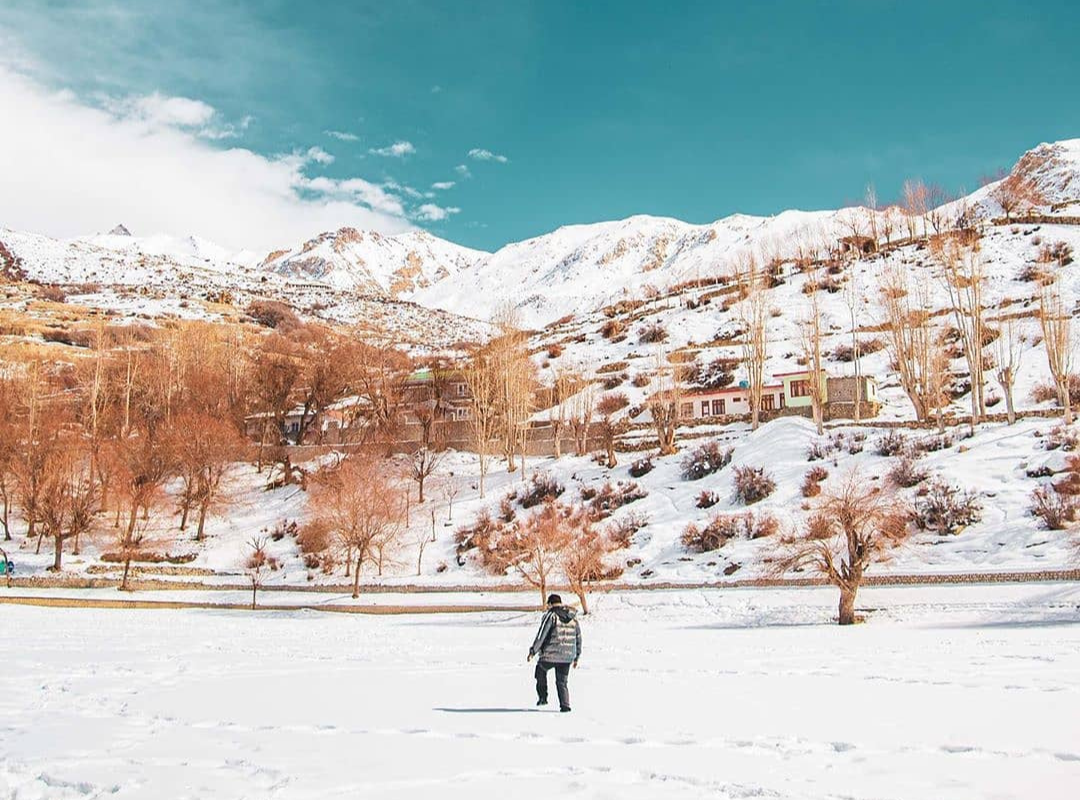
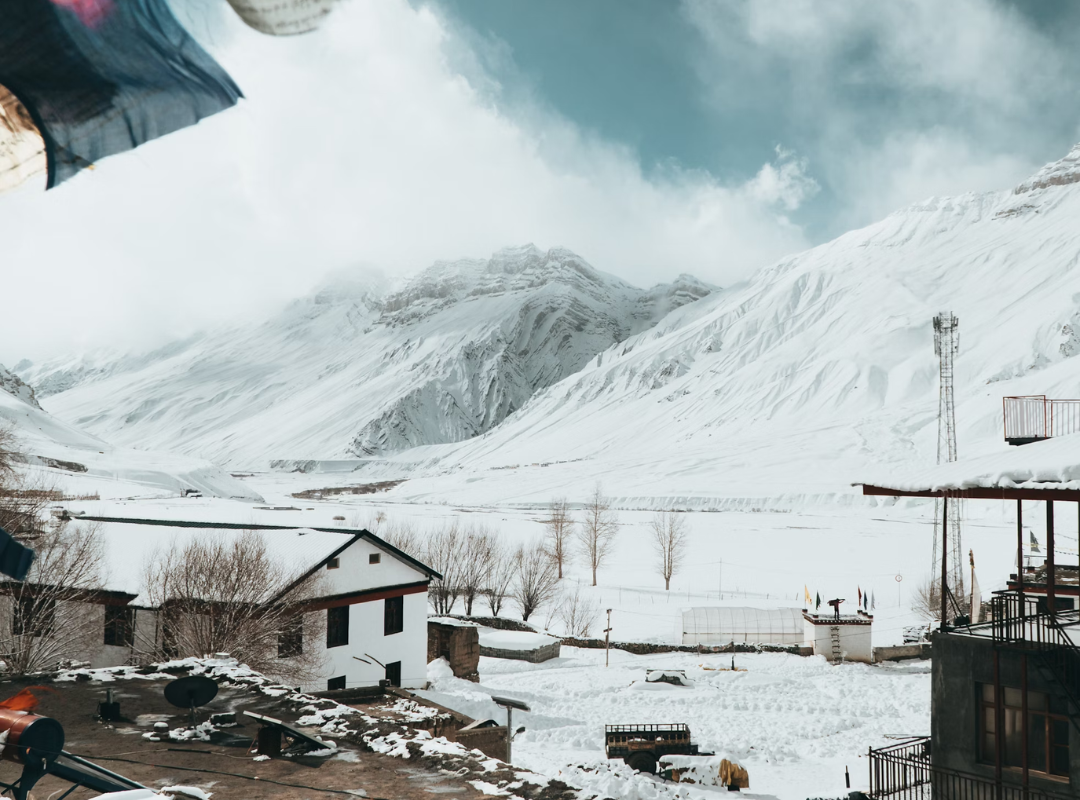
Nako Lake is one of Spiti's most enchanting sights in any season — but in winter, when the shallow lake freezes completely and snow blankets the surrounding willows and the ancient Nako Monastery, it becomes something otherworldly. The lake sits right in the centre of Nako Village at 3,662 m, making the whole scene feel like a snow globe.
Winter experience at Nako:
- The lake freezes completely in December and stays frozen through February — you can walk on the ice (with care)
- Nako Monastery, one of the oldest in the region, sits directly above the lake — stunning to photograph at sunrise with frozen water in the foreground
- The village of Nako itself — with its old houses, Buddhist stupas, and prayer wheels — is one of the most photogenic settlements in Spiti
- Snow Leopard territory — the rocky slopes above Nako are active snow leopard habitat in winter
The drive to Nako is itself one of the highlights of the Spiti circuit — a narrow road cut into vertical cliff faces above the Sutlej/Spiti confluence, with drops of hundreds of metres on one side.
Altitude: ~3,662 m. Distance from Chitkul/Sangla: ~130 km (~4–5 hours via Spiti joining road).
5. Gue Monastery — Home to the 500-Year-Old Mummy
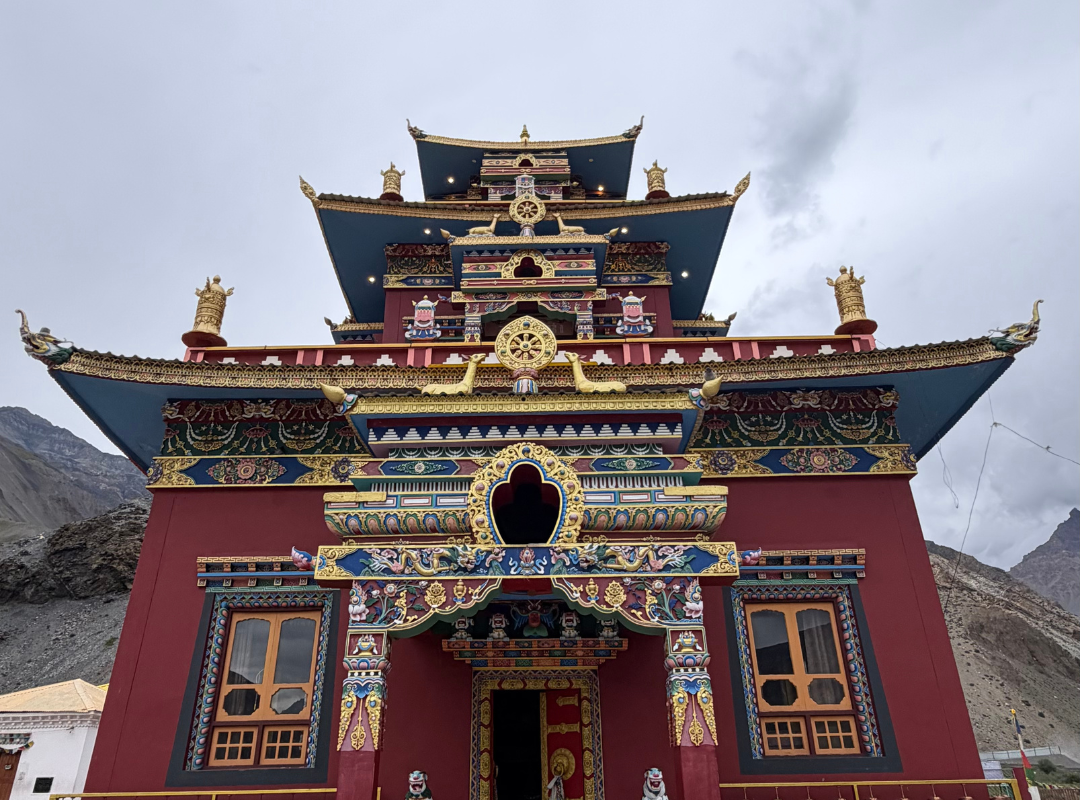
Gue Monastery is arguably Spiti's most extraordinary attraction — and most travellers outside the Spiti community have never heard of it. This small monastery in Gue village, near the Indo-Tibet border, contains the naturally mummified body of a 500-year-old Buddhist monk named Sangha Tenzin. The mummy is so well preserved that his teeth, hair, and skin are still intact — sitting in a meditation pose, eyes slightly open, as if he simply chose to stop.
The story: The monk is believed to have been a lama who voluntarily mummified himself through a process called Tukdam (a deep meditative state at the moment of death). The mummy was discovered after a 1975 earthquake shifted the earth around the monastery. Scientists have confirmed its authenticity and estimated the age at around 500 years.
In winter:
- The drive to Gue from the main Spiti road is an adventure in itself — a narrow track that requires 4WD
- The monastery is small and humble, which makes the experience more intimate than a tourist attraction
- In winter, you may be the only visitor — the resident monks offer tea and tell you the story in person
Altitude: ~3,000 m (approx.). Distance from Tabo: ~50 km via Sumdo.
6. Tabo Monastery — The Ajanta of the Himalayas
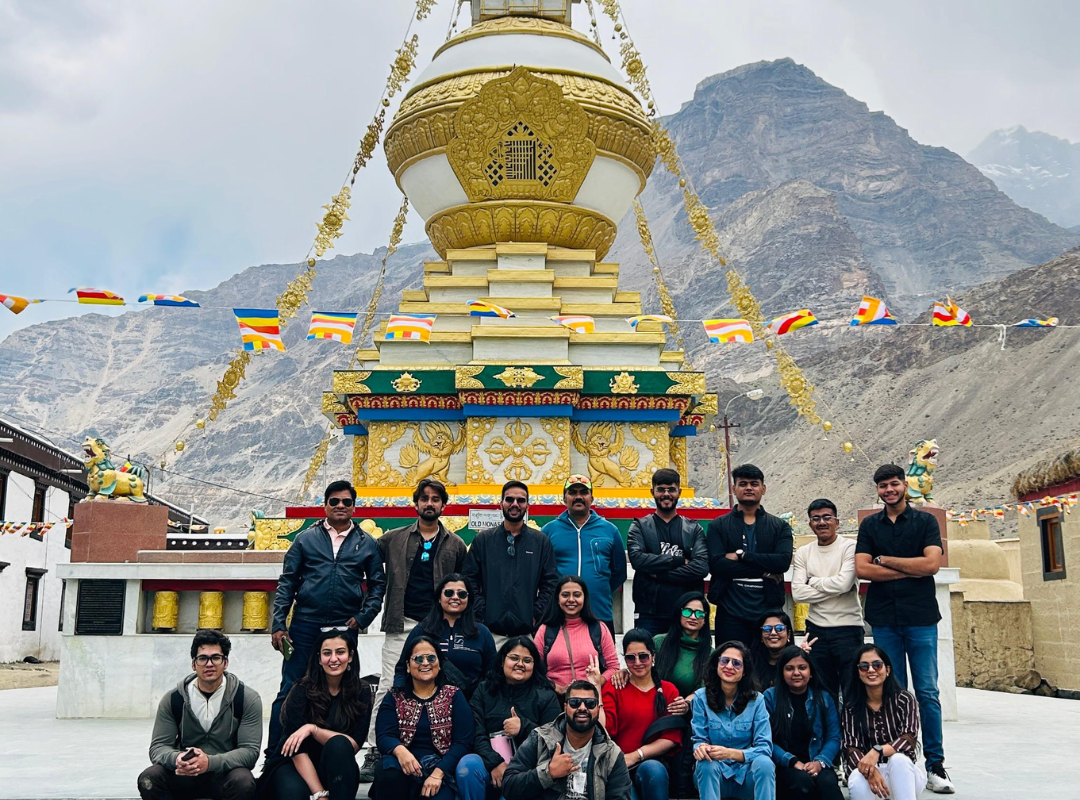
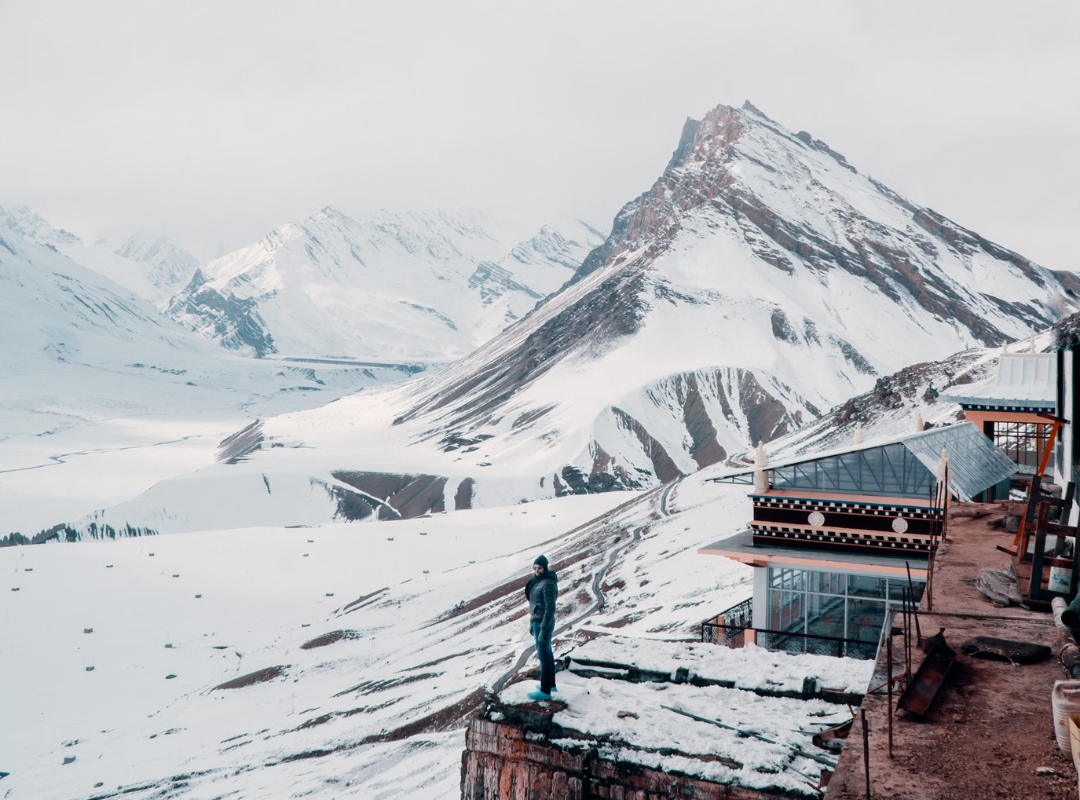
Tabo Monastery is one of the most important Buddhist monasteries in the entire Himalayan region — and at over 1,000 years old (founded in 996 CE), it is one of the oldest continuously functioning monasteries in the world. Often called the "Ajanta of the Himalayas" for its ancient murals and clay sculptures, Tabo is a UNESCO tentative heritage site and holds a collection of Buddhist art that scholars come from around the world to study.
Why Tabo is special in winter:
- The monastery's mud-and-stone structures covered in fresh snow against a backdrop of eroded brown hills — a landscape unlike anywhere else on Earth
- 9 temples within the complex, each with ancient murals, thankas (scroll paintings), and clay sculptures
- The cave monasteries above the main complex — carved into the hillside and used by monks for meditation — are accessible in winter with the right guide
- The Dalai Lama has expressed the wish to spend his final days at Tabo — a testament to its spiritual significance
- In winter, the monks here are more available for conversation; the monastery feels genuinely lived-in
Tabo Village itself is also beautiful — a cluster of traditional flat-roofed houses along the Spiti River.
Altitude: ~3,050 m. Distance from Kaza: ~47 km.
7. Dhankar Monastery — The Cliffside Fortress
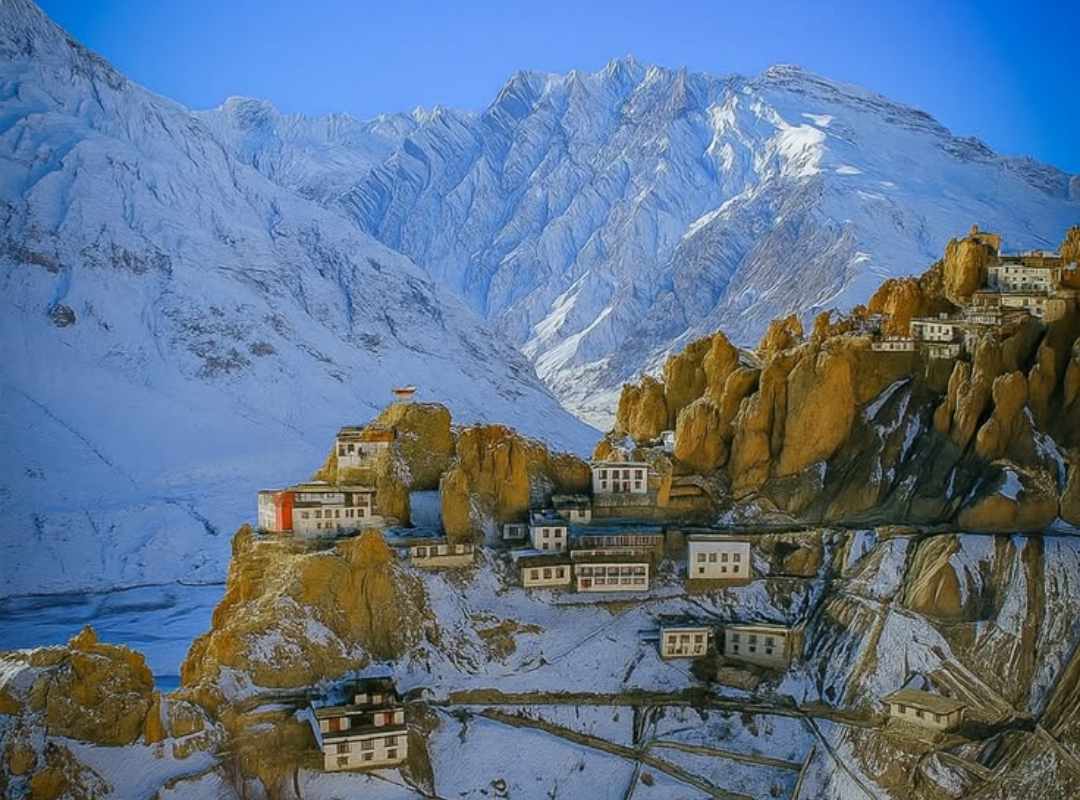
Dhankar Monastery sits on what looks like an impossible perch — a crumbling clifftop fortress monastery 300 m above the confluence of the Spiti and Pin rivers, at an altitude of 3,894 m. The word "Dhankar" means "cliff fort" in the local language, and looking at the monastery from below, you understand why.
Winter at Dhankar:
- The monastery and the cliff it sits on are draped in snow — the visual contrast between the ancient mud-and-stone structures and the white landscape is extraordinary
- The Dhankar Lake (a short trek above the monastery) freezes completely in winter — a beautiful high-altitude frozen lake with monastery views
- The confluence of the Spiti and Pin rivers far below — frozen and white — visible from the monastery walls
- The drive from Tabo to Dhankar is one of the most dramatic sections of the entire Spiti circuit — sheer drops, frozen river crossings, and constantly changing landscapes
Important: Dhankar Monastery is on UNESCO's list of the 100 most endangered heritage sites. The structures are slowly eroding — this is one of the places you should see before it changes.
Altitude: ~3,894 m. Distance from Tabo: ~35 km.
8. Kaza — The Capital of Spiti Valley in Winter
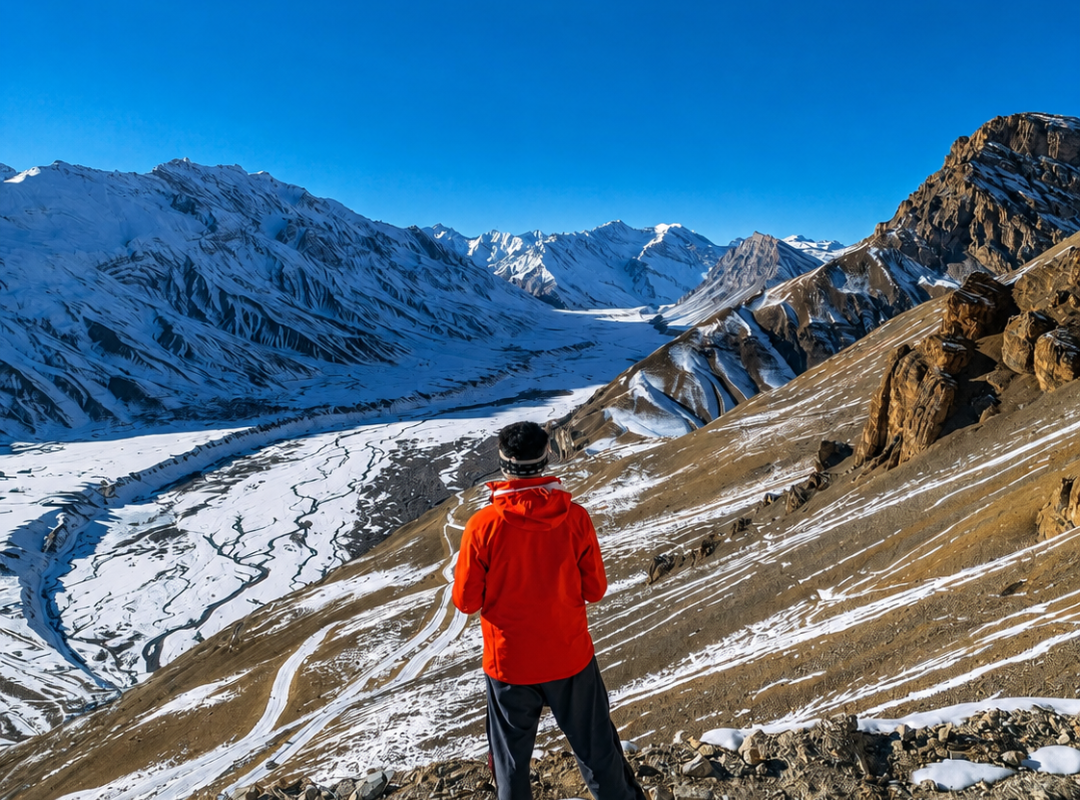
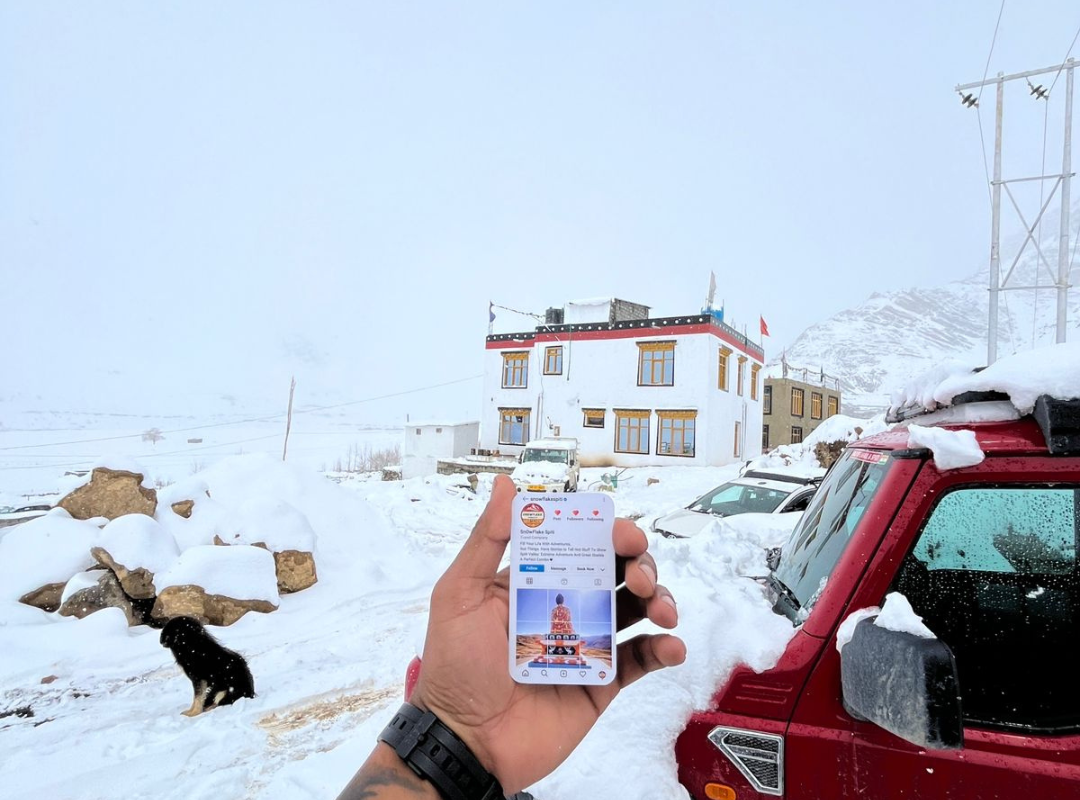
Kaza is the headquarters of the Spiti subdivision — the closest thing to a "town" in this remote valley. At 3,800 m, it sits along the Spiti River and serves as the base for exploring all the famous high-altitude villages and attractions of upper Spiti. In winter, Kaza goes into a kind of productive hibernation — essential shops stay open, the monks continue their routines, local families gather around wood fires, and the occasional group of intrepid travellers rolls in with wide eyes.
What to do in Kaza in winter:
- Use it as your base for day trips to Hikkim, Langza, Komic, Key Monastery, and Chicham Bridge
- Kaza Market — small but authentic; buy local dried apricots, walnuts, and handmade woolens from Spitian women
- Watch the locals go about their daily winter life — this is the real Spiti, not the tourist version
- The flat-roofed houses with prayer flags and the snow-covered mountains behind them make for excellent street photography
- The Spiti River in front of Kaza — frozen solid in deep winter, cracking and groaning with the cold
Altitude: ~3,800 m. Distance from Shimla: ~424 km (~12–14 hours via Kinnaur).
9. Key Monastery — Spiti's Largest and Most Iconic Gompa
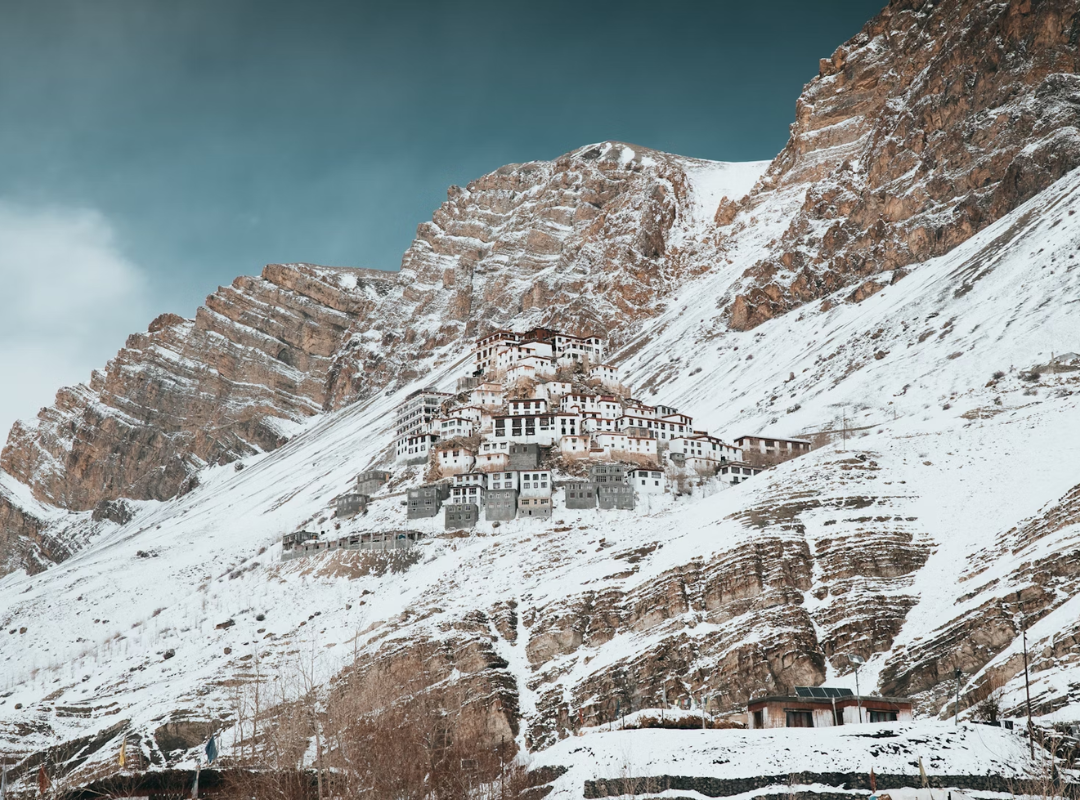
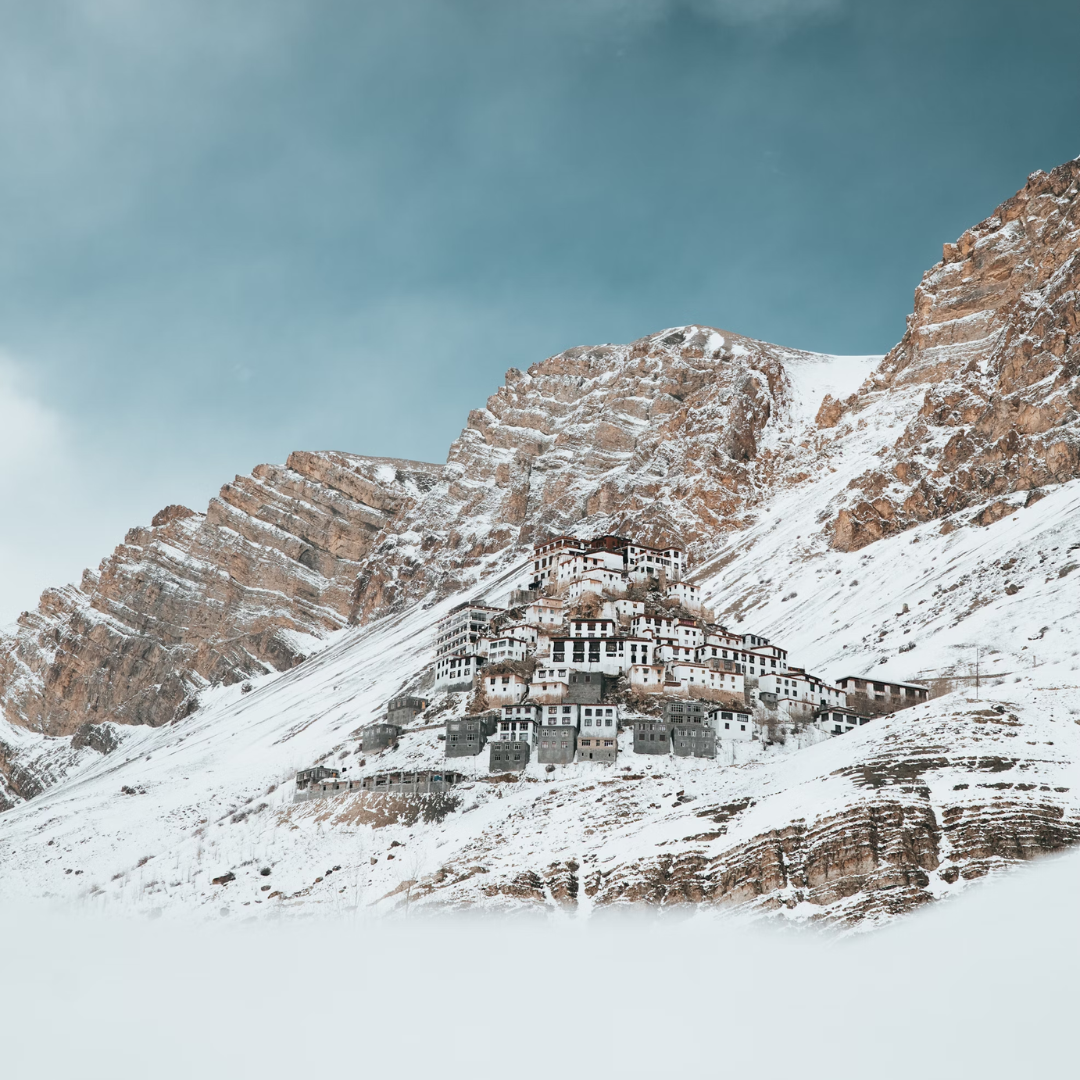
Key Monastery (also spelled Kee or Ki Gompa) is the largest and most iconic monastery in Spiti Valley. Perched on a conical hill above the Spiti River at 4,166 m, its stacked white buildings visible from kilometres away, Key has been here in some form for over 1,000 years. It houses around 300 monks and serves as the mother monastery for Spiti Valley's Buddhist community.
Winter at Key Monastery:
- The monastery completely covered in snow — each layer of the building capped in white, the whole structure glowing against the blue winter sky
- In January and February, the Losar festival (Tibetan New Year) is celebrated at Key with masked dances, prayers, and community gatherings — one of the most authentic cultural experiences available in the region
- The interior holds ancient thangka paintings, scriptures, and weapons — ask the monks for a guided tour (a small donation is expected and appreciated)
- The view from the monastery over the frozen Spiti River valley — one of the most photographed views in all of Himachal Pradesh
Altitude: ~4,166 m. Distance from Kaza: ~12 km.
10. Hikkim — World's Highest Post Office
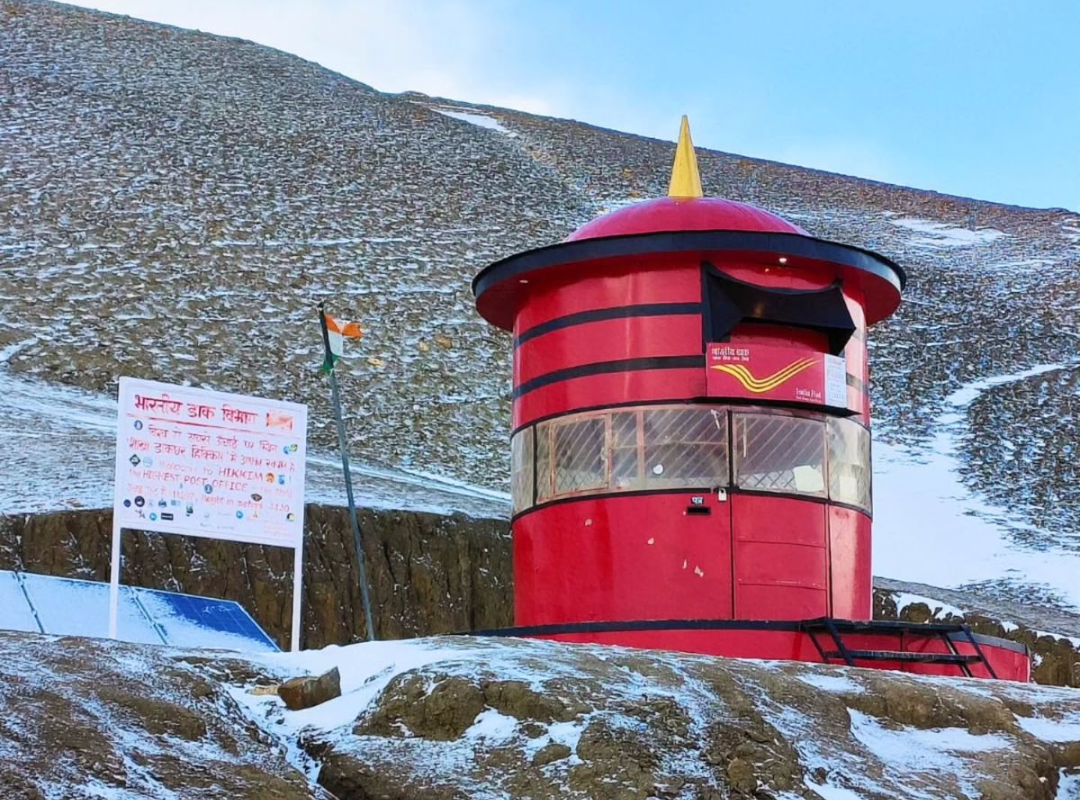
Hikkim holds a record that sounds almost too absurd to be true: this tiny village, at 4,440 m altitude, is home to the world's highest post office. Completely functional, this post office processes mail from some of the highest inhabited land on the planet — and you can send a letter or postcard from here to anywhere in the world.
The Hikkim experience in winter:
- Walk into a post office at 4,440 m altitude — in winter often surrounded by snow — and mail something home
- The postmaster, often the same local person who has held the role for years, stamps your letter with the Hikkim postmark — a unique souvenir
- The village itself is tiny — a handful of stone houses, prayer flags, and silence
- The drive from Kaza to Hikkim in winter is an adventure — snow-covered high-altitude roads with views that stretch for hundreds of kilometres
Pro tip: Bring a pre-written postcard or letter. The novelty of receiving mail stamped from the world's highest post office never gets old — for you or the recipient.
Altitude: ~4,440 m. Distance from Kaza: ~14 km.
11. Langza — The Fossil Village with the Giant Buddha
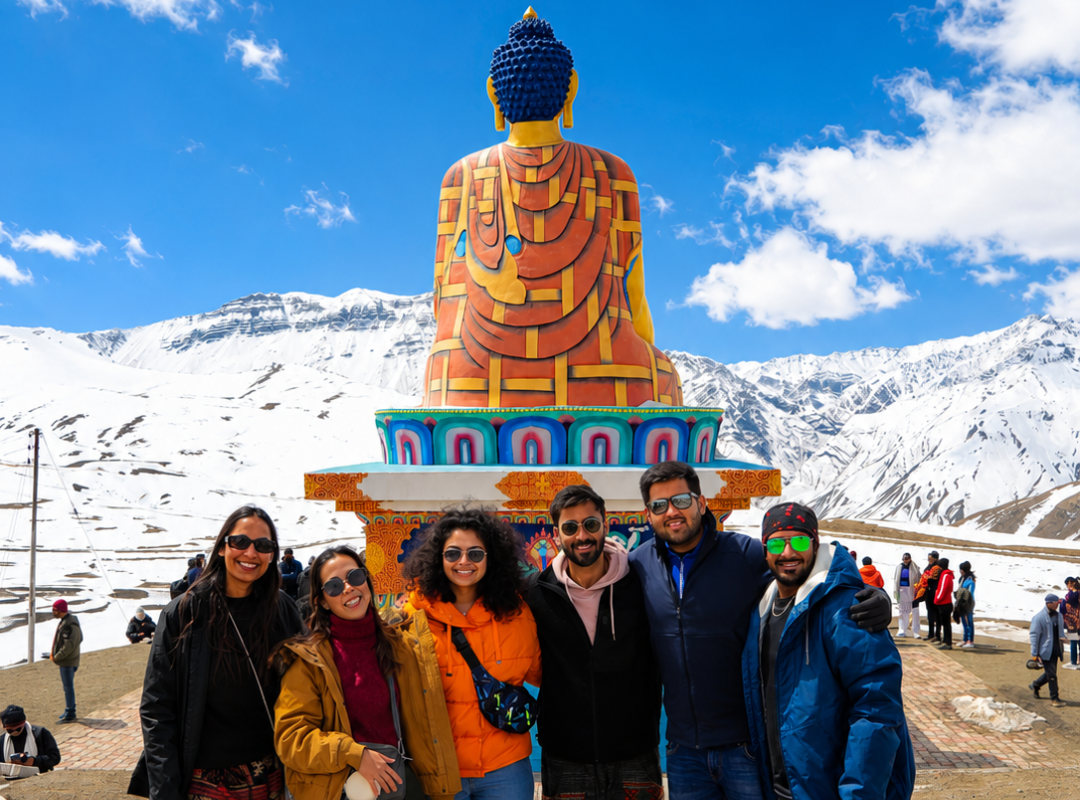
Langza is one of those places where the scale of geological time becomes suddenly, dizzyingly real. This high-altitude village at 4,400 m sits on what was once the floor of an ancient ocean — and the evidence is everywhere underfoot. Marine fossils — ammonites, shells, and coral — can be found in the rocks and soil around the village, the remains of creatures that lived here when the Tethys Sea covered this land 50 million years ago, before the Himalayas even existed.
Above the village, a giant white Buddha statue watches over the valley, visible from kilometres away.
Winter at Langza:
- The white Buddha statue against snow-covered peaks and a deep blue winter sky — one of the iconic images of Spiti
- The fossil-hunting experience — pick up rocks and you may literally be holding a 50-million-year-old marine creature in your hand
- The village in deep winter is almost completely still — a handful of families, smoke from wood fires, and the silence of 4,400 m altitude
Altitude: ~4,400 m. Distance from Kaza: ~15 km.
12. Komic — One of the World's Highest Motorable Villages
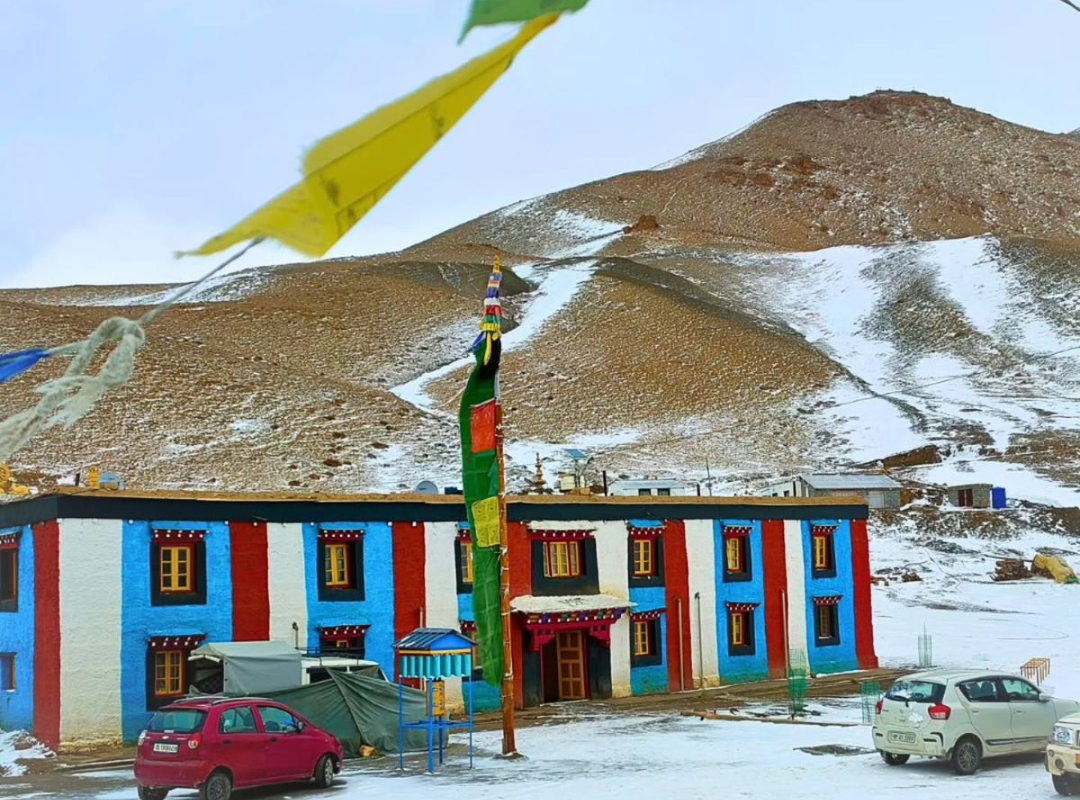
Komic is one of the world's highest motorable villages at approximately 4,587 m — a fact that sounds impressive on paper but becomes viscerally real when you're standing there in the thin, cold winter air, looking out over a landscape that seems to extend to the edge of the Earth.
The Komic experience:
- The Tanggyud Monastery in Komic — a beautiful, active monastery at extraordinary altitude
- The drive up to Komic from Kaza in winter — a narrow snow-covered track with vertical exposure on one side
- The view from Komic in winter — 360° of snow-covered Himalayan peaks, with the Spiti Valley far below
- The village has fewer than 200 permanent residents; in winter, that number drops further and the community becomes very close-knit
Altitude: ~4,587 m. Distance from Kaza: ~22 km.
13. Kibber Village — Snow Leopard Capital
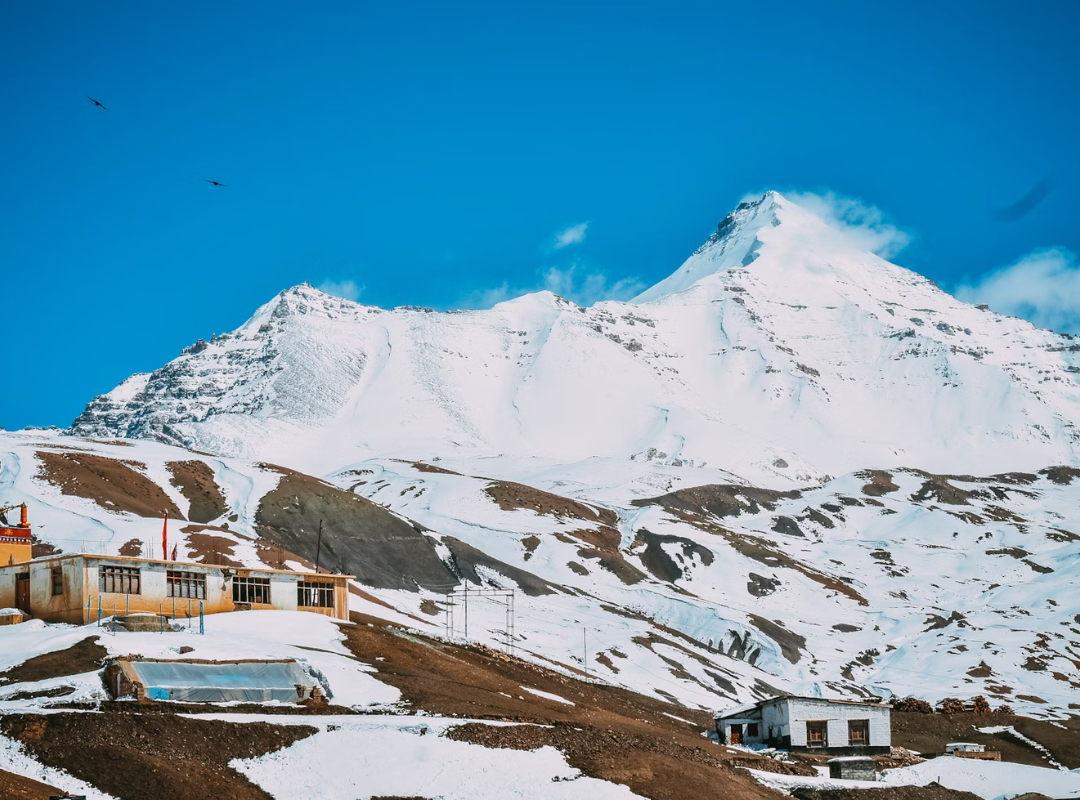
Kibber is famous for two things: being one of the highest permanently inhabited villages in the world, and being arguably the best place in India — possibly the world — to spot the snow leopard in winter. The rocky slopes, frozen streams, and blue sheep (bharal) that surround Kibber make it prime snow leopard habitat, and winter is when these solitary cats move lower in search of prey.
Snow leopard spotting at Kibber:
- The best months are January and February — peak winter when snow leopards are most active at lower altitudes
- Several local guides in Kibber offer snow leopard tracking treks — they know the terrain and the cats' regular routes intimately
- Even if you don't see a snow leopard (sightings are never guaranteed), the landscape around Kibber in winter — frozen streams, white valleys, rock faces — is extraordinary
Beyond snow leopards:
- The village itself has traditional Spitian stone houses and a Buddhist temple
- Views of the Spiti Valley and surrounding peaks from Kibber are among the best in the region
- A short drive from Kaza, making it an easy day trip from your base
Altitude: ~4,205 m. Distance from Kaza: ~18 km.
14. Chicham Bridge — Asia's Highest Suspension Bridge
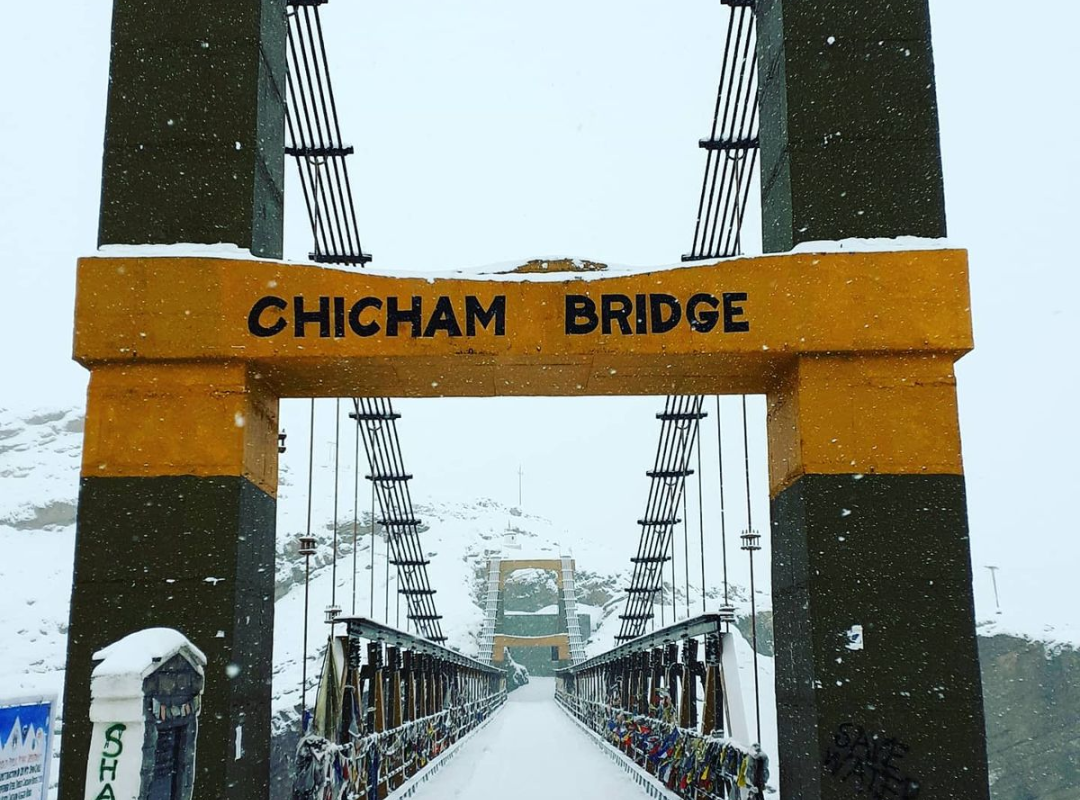
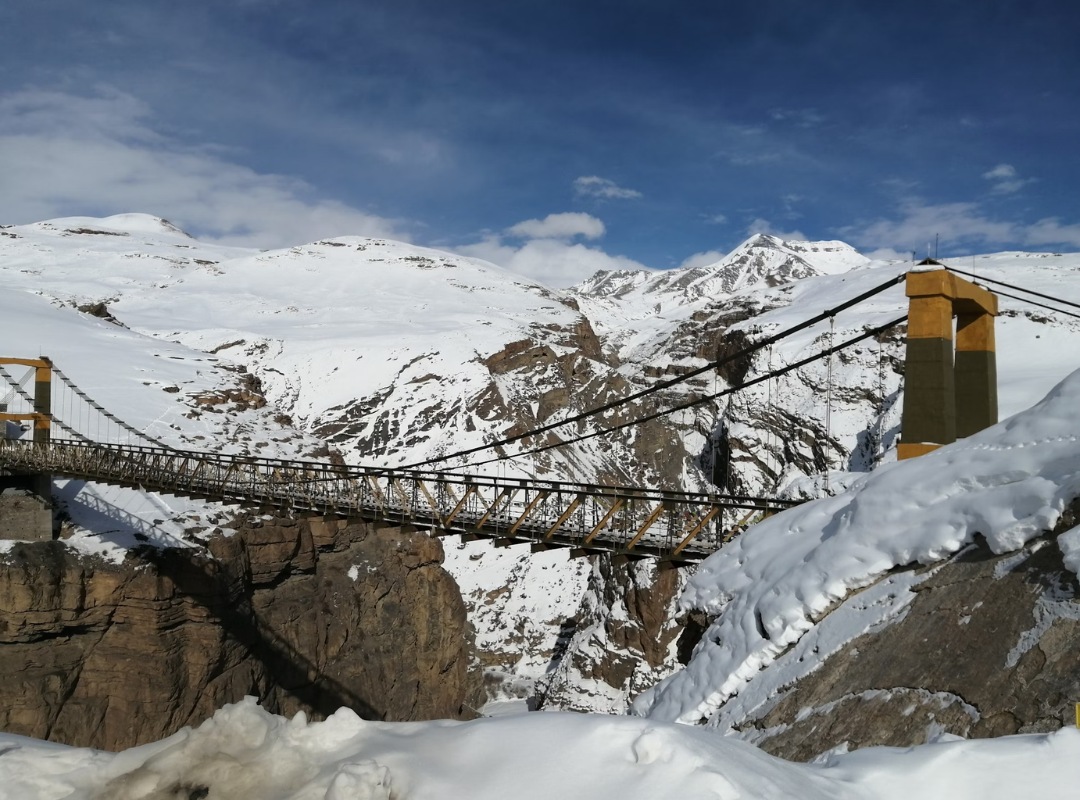
Chicham Bridge is one of the most dramatic engineering achievements in the Himalayas — a suspension bridge spanning a 150-metre-deep gorge between Kaza and Kibber, connecting two cliff faces across a void. Before this bridge was built, the residents of Chicham village had to take a 26-km detour to reach Kaza.
The experience at Chicham Bridge in winter:
- Standing on the bridge and looking straight down into the frozen, snow-filled gorge far below — genuinely vertiginous
- The bridge itself is narrow — one person crosses at a time — swaying slightly in the Himalayan wind
- The surrounding cliffs draped in snow, with the Spiti River visible as a frozen white ribbon in the valley
- Considered one of Asia's highest suspension bridges — a genuine engineering marvel
Note: The bridge can be icy in winter — wear proper footwear and be cautious.
Altitude: ~4,200 m (approx.). Distance from Kaza: ~14 km.
15. Lingti Waterfall — Frozen in Time
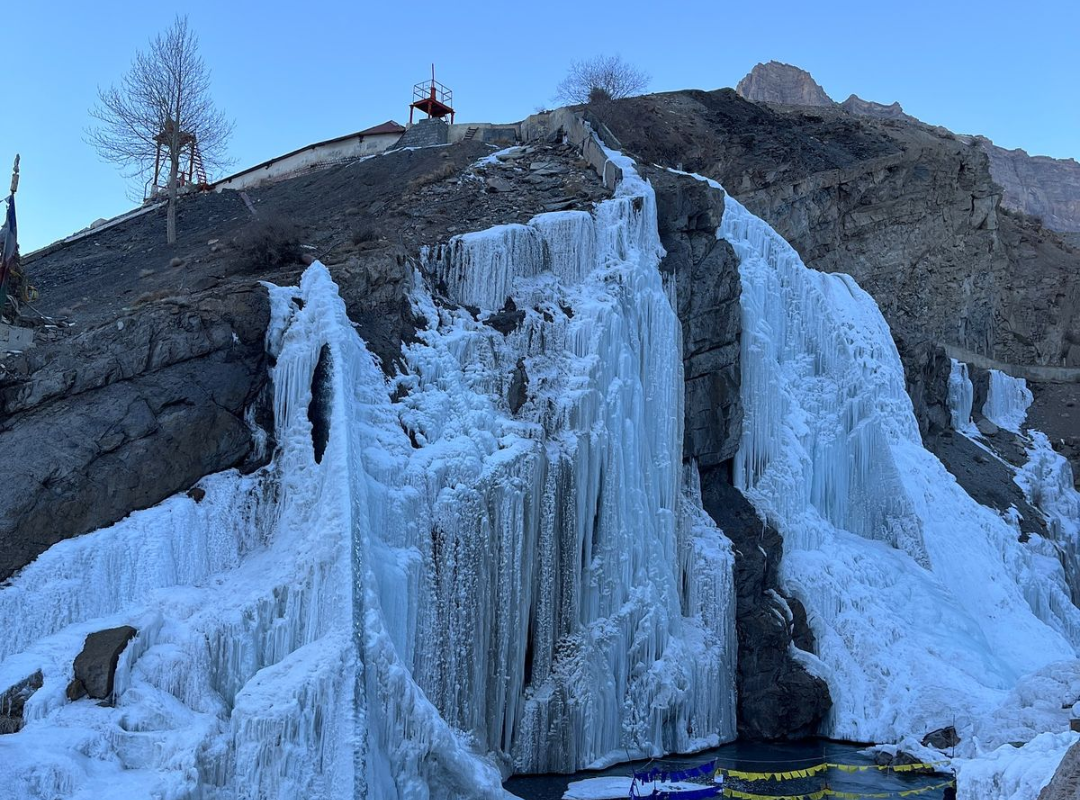
Lingti Waterfall (also called Lingti Frozen Waterfall) is one of winter Spiti's most spectacular sights — a tall cascade that freezes completely in the cold of December through February, forming a dramatic wall of blue-white ice on the cliff face. En route between Kaza and Kalpa (on the return journey), this waterfall is a mandatory stop.
The frozen waterfall experience:
- In deep winter, the waterfall freezes into massive layered ice formations — blues, whites, and aquamarines in the ice catching the sunlight
- The ice wall can be 30–40 metres tall and several metres thick at the base
- The frozen waterfall is visible from the road; a short walk brings you to its base
- The surrounding landscape — brown cliff faces, white snow, frozen river below — makes for extraordinary photography
Photography tip: Visit around midday when the sun hits the ice directly. The colours inside the ice formations are remarkable.
Book Your Winter Spiti Trip with Serenade Travels
Serenade Travels has been running Winter Spiti trips since the beginning — and we know this route better than almost anyone. Our Winter Spiti packages are the most comprehensive available, covering the full Kinnaur–Spiti circuit with experienced drivers who know every inch of these roads, carefully selected heated accommodations, and trip captains who have done this journey dozens of times.
Best of Winter Spiti — 6 Nights 7 Days (Group Trip)
The most popular Spiti group departure. This is the full circuit from Delhi and back, covering the highlights of the entire Kinnaur–Spiti Valley.
Route: Delhi → Shimla → Kalpa → Chitkul → Tabo → Dhankar → Kaza → Hikkim / Langza / Komic → Key Monastery / Chicham Bridge → Kalpa → Shimla → Delhi
What's covered:
- Chitkul — India's Last Village
- Nako Lake — frozen in winter
- Gue Monastery — 500-year-old mummy
- Tabo Monastery — 1,000 years old
- Dhankar Monastery — the cliffside fortress
- Hikkim — World's Highest Post Office
- Langza — Buddha statue and fossils
- Komic — World's Highest Motorable Village
- Key Monastery — Spiti's largest
- Chicham Bridge — Asia's highest suspension bridge
- Lingti Frozen Waterfall — en route Kaza to Kalpa
Package includes:
- AC semi-sleeper bus Delhi ↔ Shimla
- 6 nights accommodation in heated hotels and homestays
- 6 breakfasts + 6 dinners
- Comfortable Tempo Traveller / SUV from Shimla throughout
- Experienced Trip Captain for the full journey
- Medical facilities — oxygen cylinder, oximeter, medicines
- All driver charges and taxes
- E-Certificate on completion
Prices (Delhi to Delhi): Triple Sharing: ₹18,499 per person. Double Sharing: ₹19,499 per person.
Prices (Shimla to Shimla): Triple Sharing: ₹16,499 per person. Double Sharing: ₹17,499 per person.
Departures: Weekly batches running October through May. Group size: 12–16 travellers per batch.
- Safe for solo travellers, couples, and groups
- 100+ solo female travellers have done Winter Spiti with us
- No physical fitness required — purely a road trip
Book / Enquire: WhatsApp +91 86905 02310 | serenadetravels@gmail.com
Best Winter Escape to Spiti — 5 Nights 6 Days (Personal / Private Trip)
A shorter, private-format Spiti trip — perfect for those who want their own dates, their own group, and a more intimate experience.
Route: Delhi → Shimla → Kalpa → Tabo → Dhankar → Kaza (sightseeing) → Chitkul → Shimla → Delhi
Package includes:
- AC bus Delhi ↔ Shimla
- Private cab for all local sightseeing
- 5 nights in hotels / homestays
- 5 breakfasts + 5 dinners
- All sightseeing as per itinerary
- Experienced driver throughout
Prices per person: 2 persons: ₹24,999 per person. 3 persons: ₹19,999 per person. 4 persons: ₹17,999 per person. 5 persons: ₹16,999 per person.
- Choose your own departure date
- Private vehicle — just your group
- Flexible and customizable
Book / Enquire: WhatsApp +91 86905 02310 | serenadetravels@gmail.com
Winter Spiti Valley — 6 Nights 7 Days (Personal / Private Trip)
The longer private-format for those who want the complete Spiti experience at their own pace, with their own group and dates.
Route: Delhi → Shimla → Kalpa → Tabo → Dhankar → Kaza → Kaza sightseeing → Kalpa → Sangla → Chitkul → Shimla → Delhi
Package includes:
- AC bus Delhi ↔ Shimla
- Private cab for all local sightseeing
- 6 nights in hotels / homestays
- 6 breakfasts + 6 dinners
- All sightseeing as per itinerary
Prices per person: 2 persons: ₹27,999 per person. 3 persons: ₹22,999 per person. 4 persons: ₹20,999 per person. 5 persons: ₹18,999 per person.
- Your own dates, your own group
- Private vehicle throughout
- Full Spiti circuit at a relaxed pace
Book / Enquire: WhatsApp +91 86905 02310 | serenadetravels@gmail.com
What's Included in All Serenade Winter Spiti Packages
- AC bus from Delhi to Shimla and back
- Comfortable heated accommodation throughout
- Daily breakfast and dinner
- Experienced driver who knows the Spiti roads in winter
- Medical facilities on trip — oxygen cylinder, oximeter, essential medicines
- E-Certificate on completion
- 24×7 operations support
What's Not Included
- Personal expenses
- Monastery entry fees (where applicable)
- Any food outside included meals
- Expenses due to natural calamity or road conditions
Winter Spiti from Every Major City — How to Reach
The standard and safest approach to Spiti in winter is the Shimla route via Kinnaur. The Manali–Kaza road (Rohtang/Kunzum Pass) is closed from November to May and is not accessible in winter. All winter Spiti trips go via Shimla → Kinnaur → Spiti.
From Delhi (Most Common)
Distance to Shimla: ~360 km. Options: Overnight Volvo bus (₹700–1,200), fly to Chandigarh + cab, self-drive.
Total trip from Delhi: Our packages run Delhi to Delhi — Volvo included.
Spiti Valley Trip from Other Cities — Enquire for Custom Packages
Spiti Valley package from Kolkata — Fly → Delhi → Volvo to Shimla
Spiti Valley package from Mumbai — Fly → Delhi → Volvo to Shimla
Spiti Valley package from Bangalore — Fly → Delhi → Volvo to Shimla
Spiti Valley package from Chennai — Fly → Delhi → Volvo to Shimla
Spiti Valley package from Hyderabad — Fly → Delhi → Volvo to Shimla
Spiti Valley package from Pune — Fly → Delhi → Volvo to Shimla
Spiti Valley package from Chandigarh — Direct cab/bus to Shimla (3 hrs)
Spiti Valley package from Jaipur — Drive / train → Delhi → Shimla
Spiti Valley package from Lucknow — Train to Delhi → Shimla
Spiti Valley package from Ahmedabad — Fly → Delhi → Shimla
Spiti Valley package from Patna — Train / Fly → Delhi → Shimla
Spiti Valley package from Bhopal — Train / Fly → Delhi → Shimla
Spiti Valley package from Indore — Fly → Delhi → Shimla
Spiti Valley package from Nagpur — Fly → Delhi → Shimla
Spiti Valley package from Surat — Fly → Delhi → Shimla
Spiti Valley package from Guwahati — Fly → Delhi → Shimla
Spiti Valley package from Amritsar — Bus / train → Chandigarh → Shimla
Spiti Valley package from Varanasi — Train → Delhi → Shimla
Spiti Valley package from Bhubaneswar — Fly → Delhi → Shimla
Spiti Valley package from Kochi — Fly → Delhi → Shimla
Spiti Valley package from Vizag (Visakhapatnam) — Fly → Delhi → Shimla
Spiti Valley package from Coimbatore — Fly → Delhi → Shimla
Spiti Valley package from Raipur — Fly → Delhi → Shimla
For custom packages from any city: WhatsApp +91 86905 02310 | serenadetravels@gmail.com
Recommended Winter Spiti Itinerary — 6 Nights 7 Days
Day 0: Delhi → Shimla (Overnight Volvo)
Board the overnight Volvo bus from Delhi Kashmere Gate. Comfortable semi-sleeper; reach Shimla by morning.
Day 1: Shimla → Kalpa
Transfer to vehicle at Shimla. Breakfast halt at Kufri. Continue through Kinnaur Valley, stop at Kinnaur Gate for photography. Follow the Sutlej River gorge through some of India's most dramatic scenery. Evening arrival at Kalpa. Dinner and overnight.
Day 2: Kalpa → Tabo (via Chitkul → Nako → Gue)
Visit Chitkul — India's Last Village. Continue through Khab Sangam (Spiti–Sutlej confluence). Enter Spiti Valley. Stop at Nako Lake. Visit Gue Monastery if time permits. Reach Tabo by evening. Dinner and overnight.
Day 3: Tabo → Kaza (via Dhankar)
Explore Tabo Monastery in the morning — give it time, it deserves it. Continue to Dhankar Monastery — the cliffside fortress. Drive through the scenic Pin Valley junction to Kaza. Evening exploration of Kaza market. Dinner and overnight.
Day 4: Kaza Sightseeing
Full day covering Hikkim (World's Highest Post Office), Langza (Buddha statue + fossils), Komic (World's Highest Motorable Village). Afternoon free in Kaza. Dinner and overnight.
Day 5: Key Monastery → Chicham Bridge → Kibber → Kaza → Kalpa
Morning visit to Key Monastery. Chicham Bridge — the vertiginous suspension bridge. Kibber village. Then begin return: drive via Lingti Frozen Waterfall en route to Kalpa. Dinner and overnight in Kalpa.
Day 6: Kalpa → Sangla → Chitkul → Shimla
Morning at Kalpa — final views of Kinner Kailash. Drive down to Sangla and Chitkul for final exploration. Return journey to Shimla. Evening board return Volvo to Delhi.
Day 7: Arrive Delhi
Reach Delhi by morning with memories for a lifetime.
Essential Winter Spiti Packing List
Clothing (Non-Negotiable)
- Padded down jacket rated to -15°C minimum (this is serious — Kaza in January hits -20°C)
- Thermal inner layers — top and bottom — minimum 2–3 pairs
- Fleece mid-layer
- Waterproof outer layer (jacket and trousers)
- Woollen socks — minimum 4 pairs
- Snow boots with ankle support and grip
- Woollen gloves + waterproof outer gloves
- Balaclava or woollen cap + neck gaiter
Essentials
- Sunscreen SPF 50+ (UV is extreme at 3,800–4,500 m even in winter)
- Sunglasses — polarised UV protection
- Lip balm with SPF
- Moisturiser — skin dries and cracks quickly at high altitude
- Power bank — cold kills batteries fast
- BSNL postpaid SIM — works in Spiti when other networks don't
- Cash — ATMs exist in Kaza but can run out in winter
- Snacks and chocolates — emergency energy at altitude
Documents
- Original Aadhar Card (mandatory)
- 2 passport photos
Medical
- Personal prescription medicines
- Avomine for motion sickness (the roads require it)
- Altitude sickness awareness — acclimatise properly, don't rush
Important Tips for Winter Spiti Valley
- Acclimatise properly. Don't rush from Delhi to Kaza in one shot. The gradual climb via Kinnaur is the correct approach — your body needs time to adjust to the altitude gain.
- BSNL postpaid is the only reliable network. Jio, Airtel, and Vi work in Shimla and Kalpa but drop out progressively as you enter deeper Spiti. In Kaza and above, only BSNL postpaid typically works. Buy or arrange one before the trip.
- The Manali–Kaza road is closed in winter. Do not plan to enter or exit via Rohtang Pass or Kunzum Pass between November and May. All winter Spiti trips use the Shimla–Kinnaur route only.
- Expect road closures and delays. Heavy snowfall can block roads for hours or a full day. Build buffer days into your itinerary and travel with a company that has experience managing this.
- Altitude sickness is real. Kaza sits at 3,800 m; Hikkim and Komic are over 4,400 m. Headaches, fatigue, and nausea are common in the first day. Serenade Travels carries oxygen cylinders and oximeters on all Winter Spiti trips.
- Dress in layers. A single heavy jacket is less effective than three lighter layers. The temperature swings in Spiti are dramatic — 10°C warmer in a sunny vehicle than standing outside.
- Respect the monasteries. Remove shoes before entering. Dress modestly. Ask before photographing monks. A small donation to the monastery is always appreciated and goes directly to the community.
Why Book Winter Spiti with Serenade Travels?
- Experienced drivers who know Spiti winter roads — not every driver can handle these conditions
- Medical preparedness — oxygen cylinder, oximeter, and medicines on every trip
- Heated, verified accommodations — we've stayed in everything so you don't have to gamble
- Trip Captain on the ground — not just a booking agent; someone actually with you throughout
- Transparent pricing — what you see is what you pay
- Group and private options — join a batch or book your own dates
- 24×7 operations support — always reachable
- 100+ solo female travellers have completed Spiti with us safely
Contact Us
- WhatsApp: +91 86905 02310 (fastest)
- Email: serenadetravels@gmail.com
- Website: serenadetravels.in
Just send us your travel dates, city, and group size on WhatsApp — we'll get back to you with the best Winter Spiti package within hours.
Final Word: Winter Spiti is Not Like Anywhere Else
There are beautiful hill stations. There are popular Himalayan destinations. And then there is Winter Spiti — a category of travel experience that exists entirely on its own. The frozen monasteries, the snow leopard in the distance, the postcard mailed from the world's highest post office, the silence at 4,400 m that is so complete it feels loud — none of this happens anywhere else.
If the Himalayas are calling you this winter, answer with Spiti.
Serenade Travels is ready to take you there. WhatsApp us at +91 86905 02310.