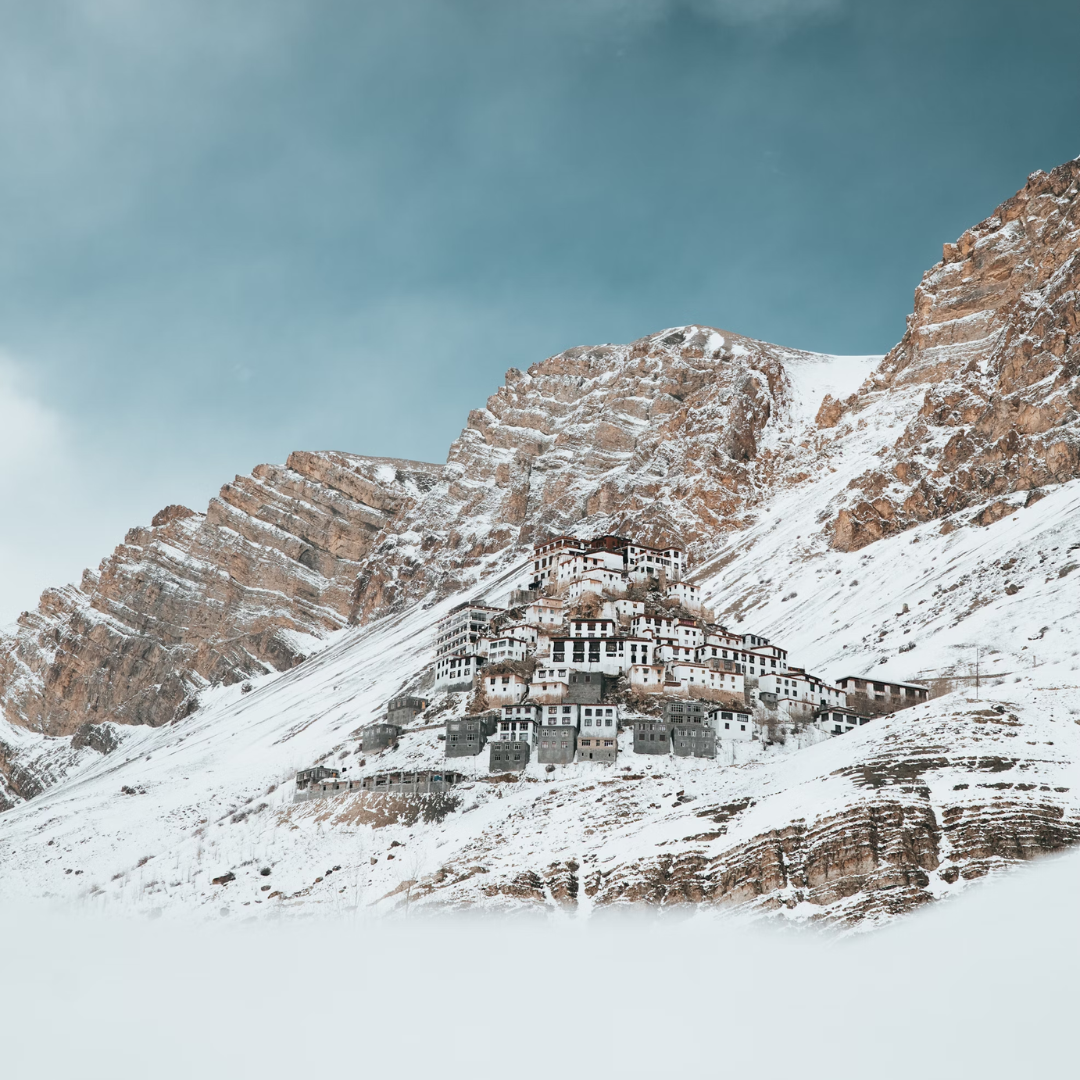
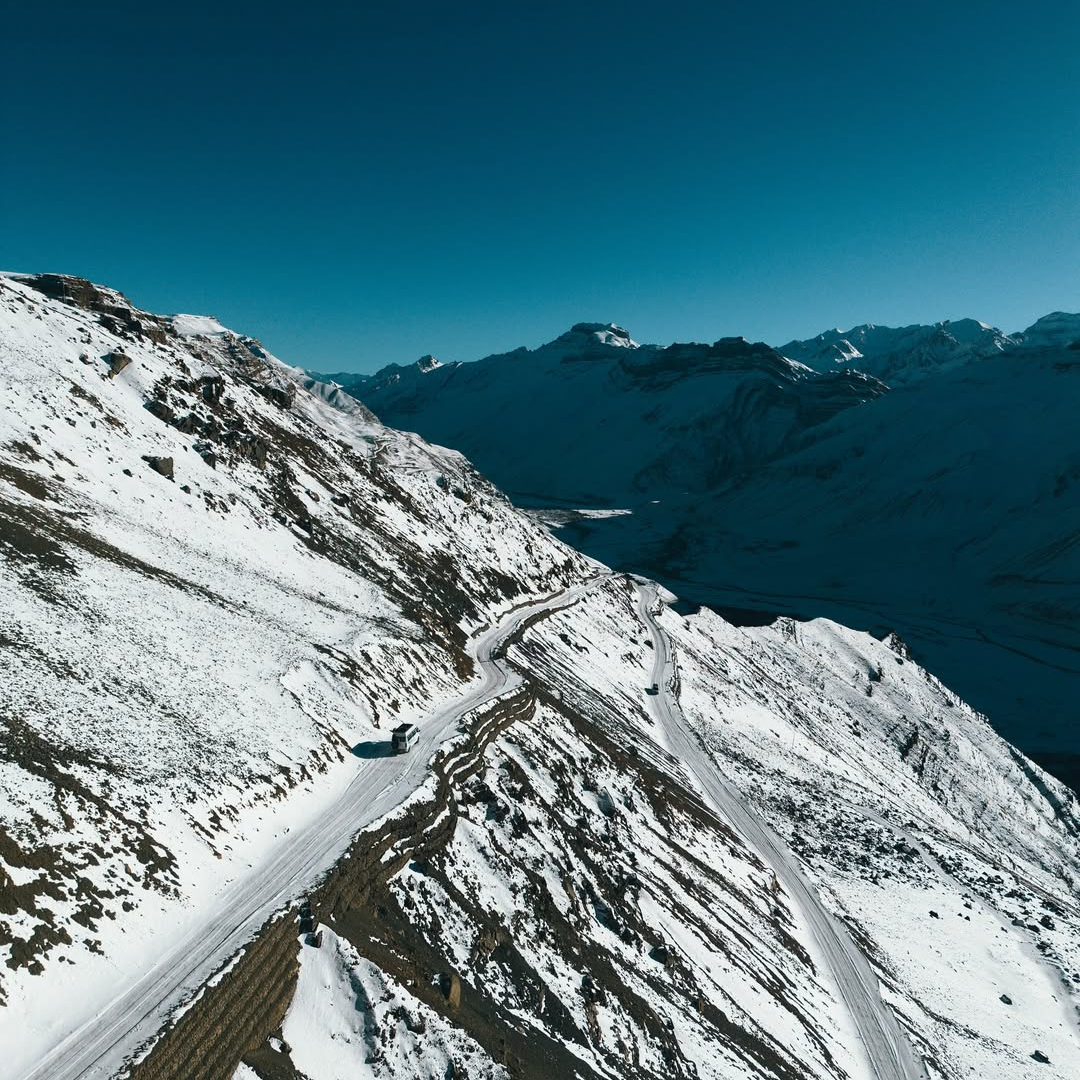
Spiti Valley in winter is one of the most surreal, raw, and unforgettable experiences India has to offer. Snow-blanketed landscapes, frozen rivers, ancient monasteries draped in white, and roads that feel like they lead to another world — this is Winter Spiti. If you've been dreaming of a Winter Spiti trip from Delhi, Mumbai, Bangalore, Ahmedabad, or Pune, this complete guide is everything you need.
Wondering if winter is the right season for you? Compare months in our best time to visit Spiti Valley guide and check the Spiti Valley trip cost breakdown.
Why Visit Spiti Valley in Winter?
Most travelers visit Spiti in summer, but Spiti Valley in winter is an entirely different experience:
- Zero crowds — The valley is nearly empty, and you get the monasteries, villages, and landscapes completely to yourself
- Snow-covered landscapes — Every corner looks like a painting
- Frozen waterfalls — The famous Lingti Frozen Waterfall is only visible in winter
- Authentic Himachali hospitality — Locals are warm and welcoming in the off-season
- Lower prices — Stays and packages are significantly more affordable
- Unique photography — Blue skies, white snow, and golden monasteries make for incredible shots
Want a ready-made Spiti Valley itinerary?
Tell us a few details — we'll send free pricing and dates.
Best Time for a Winter Spiti Trip
October to March is the ideal window for a winter Spiti experience. Here's a month-by-month breakdown:
- October — -5°C to 10°C, roads in good condition: first snowfall, stunning colors
- November — -10°C to 5°C, mostly open: deep snow begins
- December — -15°C to 0°C, open (inner roads may close): full winter, Christmas batch
- January — -20°C to -5°C, open: extreme winter, frozen everything
- February — -18°C to -3°C, open: most popular winter month
- March — -10°C to 5°C, good roads: snow still present, slightly warmer
Winter Spiti Trip from Delhi — 8-Day Complete Itinerary
Day 0: Delhi to Shimla (Overnight Bus Journey)
Boarding Point: Kashmiri Gate / Majnu Ka Tila, Delhi. Travel: Volvo AC Semi-Sleeper Bus. Board your overnight Volvo bus from Delhi in the evening. The journey to Shimla takes approximately 8–9 hours. This is a comfortable overnight journey — carry a neck pillow, light snacks, and a jacket as the bus can get cold at night.
Pro Tip: Book your seat on the lower deck for a more comfortable ride.
Day 1: Shimla → Sangla / Chitkul
Distance: ~240 km | Drive Time: 8–9 hours | Altitude: Chitkul — 3,450m. Arrive in Shimla by morning. Transfer your bags to the Tempo Traveller and head out after a quick breakfast halt at Kufri — the first mountain views of your trip. The route from Shimla winds through lush pine forests before entering the stunning Kinnaur Valley. Stop at the iconic Kinnaur Gate for photos. As you drive alongside the Sutlej River, the landscape gradually transforms into dramatic rocky gorges.
- Kufri breakfast stop
- Kinnaur Gate photo stop
- Sutlej River valley views
- Sangla Valley scenic drive
Stay: Sangla / Chitkul overnight
Day 2: Chitkul → Nako → Tabo
Distance: ~220 km | Drive Time: 8–10 hours | Altitude: Tabo — 3,280m. Start early with breakfast and head to Chitkul — India's last village before the Tibet border. Walk through this magical winter village, visit the famous Hindustan Aakhri Dhaba, and explore the Chitkul Monastery. Continue your journey into Spiti Valley proper. The landscape shifts dramatically — lush green valleys are replaced by barren brown-grey mountains dusted with snow. Cross the confluence point at Khab Sangam where the Spiti and Sutlej rivers meet in a breathtaking display. If time permits, make a stop at Gue Monastery — home to the famous 500-year-old naturally preserved mummy of a Tibetan monk. A genuinely unique and eerie sight. Reach Tabo by evening — one of Spiti's most important spiritual towns.
- Chitkul — India's last village
- Hindustan Aakhri Dhaba
- Khab Sangam river confluence
- Gue Monastery 500-year-old mummy (if time permits)
Stay: Tabo
Day 3: Tabo → Dhankar → Kaza
Distance: ~80 km | Drive Time: 3–4 hours | Altitude: Kaza — 3,800m. This is a shorter but deeply cultural day. Start with a visit to the incredible Tabo Monastery — founded in 996 AD, it is one of the oldest continuously functioning Buddhist monasteries in the world, often called the "Ajanta of the Himalayas" for its ancient murals and thangkas. En route to Kaza, stop at the dramatic Dhankar Monastery — perched impossibly on a cliff above the confluence of the Spiti and Pin rivers. The views from here are among the most stunning in all of Himachal. Arrive in Kaza — the district headquarters of Spiti — by afternoon. Check in, explore the small but vibrant local market, and acclimatize.
- Tabo Monastery (1200 years old)
- Dhankar Monastery clifftop views
- Kaza market exploration
Stay: Kaza
Day 4: Kaza Sightseeing — Hikkim, Langza, Komic
Altitude: Hikkim — 4,400m | Komic — 4,587m. Today is one of the most exciting days of the trip — you'll visit some of the highest inhabited places on Earth. Hikkim — Home to the World's Highest Post Office (4,400m). Send a postcard to your family from the top of the world — it will arrive with a special stamp and make for a unique memory. Langza — The fossil village of Spiti. At 4,400m, this remote hamlet is famous for its giant Maitreya Buddha statue overlooking the valley, and marine fossils found in the surrounding rocks (evidence that this was once a seabed millions of years ago). Komic — One of the world's highest motorable villages at 4,587m, connected to civilization by one of the world's highest roads. Visit the Tangyud Monastery here.

Stay: Kaza
Day 5: Kaza Sightseeing — Key Monastery, Chicham Bridge, Kibber
Altitude: Key Monastery — 4,166m | Chicham Bridge — 4,300m. Key Monastery (Kee Gompa) — The largest and most iconic monastery in Spiti Valley, perched dramatically on a hilltop. In winter, with snow all around, Key Monastery looks absolutely otherworldly. Allow at least an hour here. Chicham Bridge — Asia's highest suspension bridge connecting the villages of Chicham and Kibber across a 1,000-foot-deep gorge. Standing on this bridge and looking down into the valley below is a genuinely breathtaking (and slightly terrifying) experience. Kibber Village — One of the highest motorable villages in the world, known for its barren yet beautiful landscape and wildlife (snow leopards have been spotted in the surrounding mountains in winter). In the evening, visit Kaza Market — pick up local handicrafts, woolen items, and try local Spiti cuisine at one of the small cafes.
Stay: Kaza
Day 6: Kaza → Kalpa (via Lingti Frozen Waterfall)
Distance: ~190 km | Drive Time: 6–7 hours | Altitude: Kalpa — 2,960m. Pack your bags and bid farewell to Kaza as you head back through Kinnaur Valley towards Kalpa. Today's drive is incredibly scenic — you'll follow the Spiti River through dramatic gorges before the landscape softens again. The highlight of today's drive is the Lingti Frozen Waterfall — a spectacular sight that's only visible in winter when the cascade freezes completely into a curtain of ice. Stop here for photos. Pass through Powari and take the right turn up to Reckong Peo before climbing further to Kalpa — a charming Kinnauri town famous for its apple orchards and jaw-dropping views of the Kinner Kailash mountain range.
- Lingti Frozen Waterfall
- Kinnaur Valley scenic drive
- Kinner Kailash mountain views from Kalpa
Stay: Kalpa
Day 7: Kalpa → Shimla → Delhi (Overnight Bus)
Distance: Kalpa to Shimla ~235 km | Drive Time: 7–8 hours. Wake up early in Kalpa for sunrise views of Kinner Kailash — a magical start to your final day. After breakfast, make a stop at Suicide Point (locally known for its panoramic views — don't let the name scare you!). Drive back to Shimla via Reckong Peo. Arrive in Shimla by evening and board your overnight Volvo bus back to Delhi.
Stay: Overnight bus to Delhi
Day 8: Arrive Delhi
Reach Delhi by morning with a heart full of memories, a camera full of incredible photos, and stories you'll tell for years.
Winter Spiti Trip from Different Cities
Winter Spiti Trip from Mumbai
- Total Journey: Mumbai → Delhi (flight) → Shimla (overnight bus) → Spiti → Delhi → Mumbai
- Best Way: Fly to Delhi, join the group departure from Delhi
- Flight Time: ~2 hours Mumbai to Delhi
- Recommended: Arrive Delhi by 2 PM on Day 0 to board the overnight bus comfortably
Winter Spiti Trip from Bangalore
- Total Journey: Bangalore → Delhi (flight) → Shimla (overnight bus) → Spiti → Delhi → Bangalore
- Best Way: Fly to Delhi, join the group departure
- Flight Time: ~2.5 hours Bangalore to Delhi
- Recommended: Take a morning flight to Delhi, arrive by noon on Day 0
Winter Spiti Trip from Ahmedabad
- Total Journey: Ahmedabad → Delhi (flight/train) → Shimla (overnight bus) → Spiti → Delhi → Ahmedabad
- Best Way: Take a morning flight or Shatabdi train to Delhi
- Train Option: Ahmedabad-Delhi Rajdhani (overnight) — arrive Delhi morning of Day 0
- Flight Time: ~1.5 hours Ahmedabad to Delhi
Winter Spiti Trip from Pune
- Total Journey: Pune → Delhi (flight) → Shimla (overnight bus) → Spiti → Delhi → Pune
- Best Way: Fly to Delhi, join the group departure
- Flight Time: ~2 hours Pune to Delhi
- Recommended: Book early morning flight to arrive Delhi by 12 PM on Day 0
Winter Spiti Trip from Chennai
- Total Journey: Chennai → Delhi (flight) → Shimla (overnight bus) → Spiti → Delhi → Chennai
- Flight Time: ~2.5 hours Chennai to Delhi
What's Included in a Winter Spiti Package (Serenade Travels)
- AC Semi-Sleeper Volvo bus Delhi → Shimla and Shimla → Delhi
- Tempo Traveller / SUV Shimla → Shimla circuit
- 6 nights accommodation in comfortable properties
- 6 breakfasts + 6 dinners
- Experienced trip captain throughout
- Friendly, skilled driver for mountain roads
- Medical facilities: Oxygen cylinder, oximeter, medicines
- All taxes and driver charges
- E-Certificate on completion
Winter Spiti Packing List
Mandatory Documents
- Original Aadhar Card
- 2 passport photos
Clothing (Critical for Winter Spiti)
- Thermal inner wear (top + bottom) — 2 sets
- Fleece layer / sweater
- Heavy padded jacket (rated to at least -10°C)
- Woollen & water-resistant hand gloves
- Woollen socks (3–4 pairs)
- Woollen cap or balaclava
- Face mask or neck gaiter
- Trekking shoes / snow boots
Accessories
- Sunglasses (UV protection — essential at high altitude)
- Sunscreen SPF 50+ (sun is strong even in winter)
- Lip balm
- Moisturiser (skin gets very dry)
- Power bank (cold drains batteries faster)
- Camera
- Hot water bottle
- Postpaid SIM card (BSNL works best in Spiti)
- Snacks and dry fruits for the road
Medical Kit
- Diamox (for altitude sickness — consult your doctor)
- Avomine (for motion sickness on mountain roads)
- Personal prescription medicines
- Basic first aid
Important Tips for Winter Spiti
- Acclimatize properly — Don't rush. Spend time in Shimla and Sangla before going to higher altitudes.
- Stay hydrated — Drink 3–4 litres of water daily. Dehydration worsens altitude sickness.
- No alcohol for the first 2 days — Alcohol worsens altitude sickness significantly.
- Carry cash — ATMs in Spiti are unreliable and often out of cash. Carry sufficient cash from Shimla.
- BSNL SIM works best — Airtel works in some areas, BSNL has the best coverage in Spiti.
- Keep buffer days — Weather can change suddenly. Don't book return flights too tight.
- Listen to your body — If you feel severe headache, nausea, or breathlessness, inform your trip captain immediately.
- Charge devices at every opportunity — Power cuts are common in villages.
- Respect local culture — Spiti has a deeply Buddhist culture. Dress modestly when visiting monasteries.
- Book early — Winter Spiti batches fill up fast, especially Christmas and New Year batches.
Winter Spiti Package Cost (2025–2026)
- Delhi to Delhi, Triple Sharing — ₹18,499 per person
- Delhi to Delhi, Double Sharing — ₹19,499 per person
- Delhi to Delhi, Triple Sharing (Christmas/New Year) — ₹21,999 per person
- Delhi to Delhi, Double Sharing (Christmas/New Year) — ₹23,999 per person
All prices include taxes.
Book Your Winter Spiti Trip
Ready to experience the magic of Winter Spiti? Batch dates available from October through May — regular weekly departures every Friday from Delhi. Christmas and New Year special batches available — book early as these fill up fast!
WhatsApp us at +91 86905 02310 or email serenadetravels@gmail.com to book your Winter Spiti trip.
Written by the travel experts at Serenade Travels — specialists in Spiti Valley group trips since 2019.
Ready to Experience It?
Best of Winter Spiti
Join a group departure with Serenade Travels — all logistics handled, experienced trip leader included.
View Winter Spiti Trip →