Ladakh has officially declared 23 heritage sites as Protected Monuments. Here is your complete guide to every petroglyph, ancient cave, Buddhist carving and medieval fort — with itineraries, travel tips and the best time to visit.
Most people arrive in Ladakh with a list that looks something like this: Pangong Lake, Nubra Valley, Khardung La, Magnetic Hill. It is a fine list. But Ladakh has just given travellers a compelling reason to look deeper.
In July 2026, Lieutenant Governor Vinai Kumar Saxena approved a landmark notification declaring 23 archaeological and cultural sites across Leh and Kargil districts as Protected Monuments — the most significant heritage conservation step the Union Territory has taken since its establishment. The sites span prehistoric petroglyphs, ancient Buddhist rock carvings, medieval forts, sacred meditation caves and hilltop monasteries that collectively tell a story stretching back thousands of years.
For travellers who want to experience a Ladakh that goes beyond the postcard shots, this is the guide you need.
Why These 23 Sites Matter
Ladakh's position along the ancient Silk Route made it a meeting point for traders, Buddhist monks, Tibetan pilgrims and Central Asian travellers for centuries. The evidence of that crossing of cultures is written into rock faces, carved into cave walls and built into the hillsides of valleys that most tourists drive straight through.
Many of the newly protected sites were at genuine risk. Without legal status, they faced threats from unplanned construction, erosion, and the kind of quiet neglect that eventually makes an irreplaceable thing disappear. The 2026 notification gives these monuments statutory protection — enabling conservation, preventing encroachment and creating the framework for responsible tourism.
It also opens a new chapter for travellers. Heritage circuits that did not exist before are now possible to plan. The monasteries and lake views are still there. Now there is something more to explore alongside them.
Want a ready-made Ladakh itinerary?
Tell us a few details — we'll send free pricing and dates.
The Complete List: All 23 Protected Monuments in Ladakh
- 1. Petroglyph Site at Sharnos — Leh (Rock Art)
- 2. Maitreya Buddha Rock Carving at Shey — Leh (Rock Carving)
- 3. Tingmosgang Fort — Leh (Fort)
- 4. Ancient Caves at Saspol — Leh (Caves)
- 5. Petroglyph Site at Domkhar — Leh (Rock Art)
- 6. Petroglyph Site at Lehdo — Leh (Rock Art)
- 7. Petroglyph Site at Alchi — Leh (Rock Art)
- 8. Petroglyph Site at Murgi — Leh (Rock Art)
- 9. Stongday Gonpa — Kargil (Monastery)
- 10. Meditation Cave of Onpo at Hunder — Leh (Sacred Cave)
- 11. Hunder Cave — Leh (Historic Cave)
- 12. Dechen Tsomo Khar — Leh (Fort)
- 13. Stampuk Cave — Leh (Cave)
- 14. Chamba Rock Carving — Leh (Rock Carving)
- 15. Zong Chamba — Leh (Rock Carving)
- 16. Rock-Carved Buddha Statue at Hunder — Leh (Buddha Statue)
- 17. Rigsum Gonbo Rock Carvings — Leh (Rock Carvings)
- 18. Chamba Karpo at Diggar — Leh (Buddhist Monument)
- 19. Chamba Rock Carving at Tokpo — Leh (Rock Carving)
- 20. Folong Singey — Leh (Natural Heritage)
- 21. Sumoor Fort — Leh (Fort)
- 22. Rock Inscriptions at Yourbaltak — Kargil (Rock Inscriptions)
- 23. Petroglyph Site at Mangmore — Kargil (Rock Art)
Site-by-Site Guide
1. Petroglyph Site at Sharnos — Leh
Among Ladakh's oldest surviving archaeological records, the rock engravings at Sharnos depict animals, hunting scenes and geometric patterns made by prehistoric communities long before written records existed in this part of the Himalayas. Early morning light brings out the texture of the carvings in a way that midday sun cannot — photographers should arrive before 8 AM. Best for archaeology enthusiasts and photographers; combine with Shey Palace and Sindhu Ghat.
2. Maitreya Buddha Rock Carving at Shey — Leh
Close to the historically significant Shey Palace and Sindhu Ghat, this large-scale rock carving of the future Buddha is one of the finest examples of medieval Buddhist sculpture in the Leh district. The scale of the work — carved directly into the cliff face — reflects the deep reverence with which ancient Ladakhi craftsmen approached their faith. Best for Buddhist history and art lovers; combine with Shey Palace and Thiksey Monastery.
3. Tingmosgang Fort — Leh
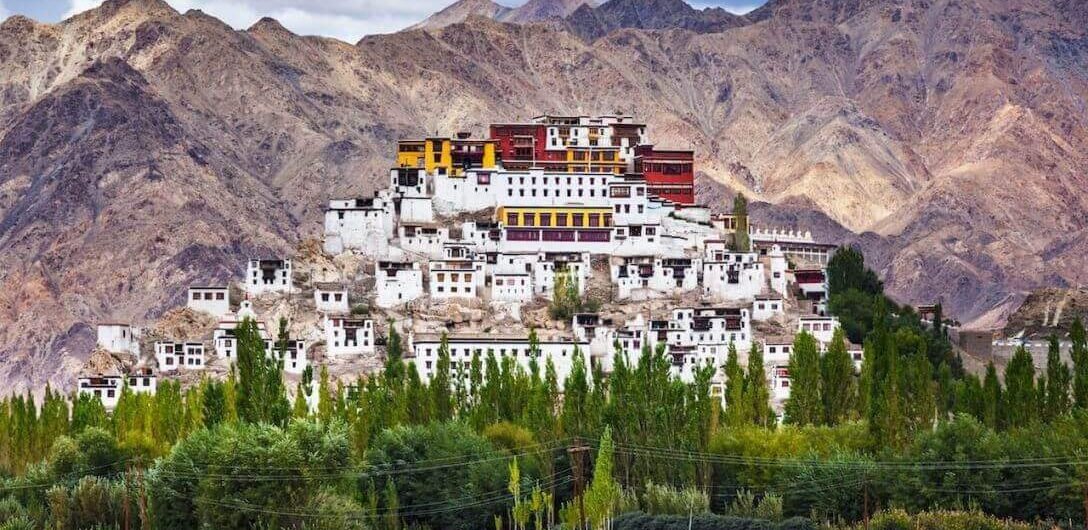
Once a royal stronghold in western Ladakh, Tingmosgang Fort sits on elevated ground overlooking the valleys and ancient trade corridors that once connected Ladakh to Kashmir and Tibet. The ruins carry real atmosphere — walking through them feels less like visiting a tourist attraction and more like reading a chapter of history that most people have never heard. Best for history lovers and landscape photography, with picturesque villages and local monasteries nearby.
4. Ancient Caves at Saspol — Leh
The Saspol Caves are genuinely extraordinary and genuinely undervisited. Carved into cliff faces above the Indus River, these chambers contain Buddhist murals that have survived centuries of Himalayan weather. Historians believe the caves functioned as monastic retreats — places where monks sought the solitude that the landscape naturally provides. Travel tip: carry a torch, wear shoes with grip for the uneven approach, and visit in the morning when light enters the cave openings.
5–8. Petroglyph Sites at Domkhar, Lehdo, Alchi and Murgi — Leh
These four sites collectively form one of the most remarkable prehistoric rock art trails in the Indian Himalayas. Each location preserves engravings made across different periods, meaning the artistic styles, subjects and techniques shift as you move between sites. Domkhar shows wild animals and hunting scenes. Lehdo reflects the influence of traders moving through the valley. Alchi's petroglyphs sit near one of the world's most celebrated Buddhist monasteries, adding another layer to an already rich destination. Murgi offers peaceable surroundings ideal for slow, unhurried exploration. None of these sites sees heavy tourist traffic — that is precisely the point.
9. Stongday Gonpa — Kargil
Perched dramatically on a hilltop in Kargil district, Stongday Gonpa is among Ladakh's oldest functioning monasteries and one of its most visually striking. The panoramic views across the Zanskar range alone justify the drive. Inside, ancient statues, prayer halls and sacred texts preserved across generations of monastic life give the place a living quality that many of Ladakh's more visited monasteries have started to lose. Best for spiritual travel and panoramic photography — visit during morning prayers for the most atmospheric experience.
10–11. Meditation Cave of Onpo and Hunder Cave — Nubra Valley
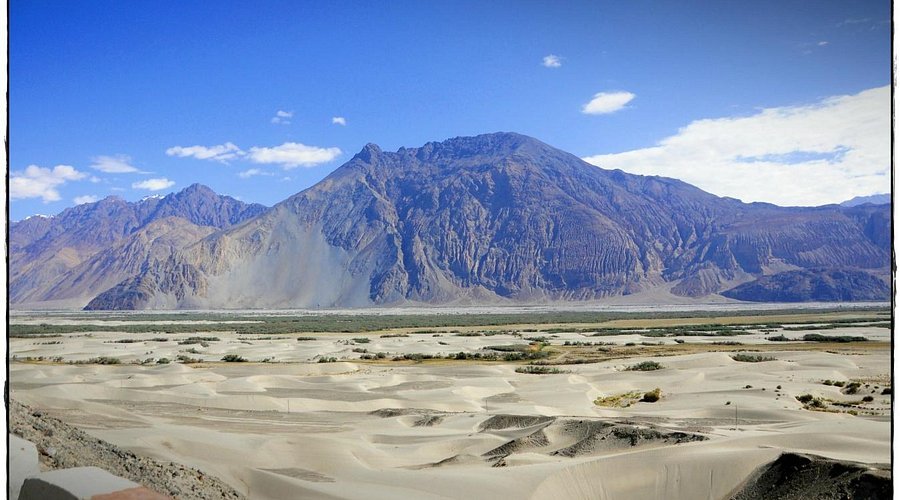
Hidden within Nubra Valley — a place most visitors associate entirely with sand dunes and Bactrian camels — these two caves add a dimension of contemplative heritage that most tourists entirely miss. The Meditation Cave of Onpo is believed to have been used by Buddhist monks in retreat; the stillness of the location makes that entirely credible. Hunder Cave adds historical depth to what is already one of Ladakh's most dramatic landscapes. Combine with Diskit Monastery, the Hunder sand dunes and a Bactrian camel safari.
12. Dechen Tsomo Khar — Leh
This medieval fort, though now partially in ruins, occupies elevated ground with views that explain immediately why it was built where it was. Ladakhi kingdoms used positions like this to monitor the mountain passes and trade routes that represented both economic lifelines and military vulnerabilities. The setting rewards exploration.
13. Stampuk Cave — Leh
Lesser visited than almost anything else on this list, Stampuk Cave combines geological curiosity with centuries of Buddhist association. Local communities maintain deep connections to the site, which has served as a meditation retreat across generations. Travellers who appreciate solitude and authentic spiritual heritage will find it rewarding.
14–15. Chamba Rock Carving and Zong Chamba — Leh
Two outstanding examples of Ladakhi Buddhist rock sculpture. The Chamba Rock Carving depicts iconic Buddhist iconography rendered directly onto the cliff face — an approach that reflects how thoroughly religion shaped artistic life in medieval Ladakh. Zong Chamba presents Maitreya Buddha in a style clearly influenced by Tibetan Buddhist tradition, making it valuable both artistically and historically. Best photographed in early morning or late afternoon, when directional light crosses the carved surfaces.
16. Rock-Carved Buddha Statue at Hunder — Leh
Hunder's sand dunes and its Bactrian camel herds draw visitors from across the world. The rock-carved Buddha statue nearby is known to very few of them. It represents Nubra Valley's significance not just as a landscape but as a centre of Buddhist culture and trans-Himalayan trade for centuries — worth ten minutes of any Hunder itinerary.
17–19. Rigsum Gonbo Carvings, Chamba Karpo and Tokpo Rock Carving — Diggar
Three monuments in the Diggar area that together form a worthwhile heritage half-day. The Rigsum Gonbo carvings depict three protective deities central to Tibetan Buddhist practice. Chamba Karpo — the White Maitreya Buddha — is Diggar's most important monument and one of the most serene sites on this list. The Tokpo rock carving completes the picture of Diggar as a place where Buddhist artistic traditions were practised across several centuries. Treat these sites with respect — local communities continue to consider them sacred.
20. Folong Singey — Leh
A naturally occurring rock formation resembling a lion's face, Folong Singey is the most unusual entry on the protected list. Its cultural significance comes not from human craftsmanship but from its place in local folklore and oral tradition. Families, nature lovers and photographers will find it engaging — a reminder that heritage conservation is not only about architecture.
21. Sumoor Fort — Nubra Valley
Guarding what were once vital trans-Himalayan trade corridors connecting Ladakh with Central Asia and Tibet, Sumoor Fort has partially survived the centuries in a way that allows visitors to grasp its strategic logic. The Nubra Valley setting — dramatic mountains, poplar groves, the Shyok River below — makes this one of the most photographically rewarding heritage stops on the list. Nearby: Samstanling Monastery, Panamik Hot Springs and Diskit Monastery.
22. Rock Inscriptions at Yourbaltak — Kargil
Where the petroglyph sites preserve pictorial art, the inscriptions at Yourbaltak record language — ancient scripts that give researchers direct evidence of administrative, religious and cultural practices in Ladakh's documented past. For travellers interested in archaeology rather than aesthetics, this site is particularly valuable.
23. Petroglyph Site at Mangmore — Kargil
The final site on the protected list and one of Kargil district's most significant prehistoric locations. The carvings at Mangmore have survived millennia of Himalayan weather and offer some of the most detailed prehistoric imagery in the region. As awareness of Ladakh's heritage tourism grows, Mangmore is positioned to become an increasingly significant destination.
Suggested Itineraries
5-Day Ladakh Heritage Highlights
- Day 1 — Leh acclimatisation: arrive, rest, gentle walk around Leh market. Do not travel to altitude on Day 1.
- Day 2 — Shey and Leh circuit: Maitreya Buddha Rock Carving at Shey → Sindhu Ghat → Sharnos Petroglyphs → Leh Palace.
- Day 3 — Sham Valley heritage: Saspol Caves → Alchi Monastery + Petroglyphs → Tingmosgang Fort → Domkhar Petroglyphs.
- Day 4 — Nubra Valley: drive via Khardung La → Hunder Cave → Meditation Cave of Onpo → Rock-Carved Buddha → Sand Dunes.
- Day 5 — Diggar and Sumoor: Rigsum Gonbo Carvings → Chamba Karpo → Sumoor Fort → return to Leh.
7-Day Cultural Ladakh Tour
Add to the 5-day base: a Stongday Gonpa day trip into Kargil, Dechen Tsomo Khar, Stampuk Cave, and the Lehdo and Murgi petroglyph sites.
10-Day Complete Heritage Expedition
All 23 protected monuments plus Pangong Lake, Tso Moriri, Leh Palace and Shanti Stupa. Ideal for archaeology enthusiasts and serious heritage travellers.
Best Time to Visit Ladakh's Heritage Sites
- May–June: roads reopen, clear skies, cool mornings — best for first-time visitors and cave sites.
- July–August: long days, lush valleys — best for photography and monastery festivals.
- September–October: crisp air, golden light, fewer crowds — the best overall window for heritage travel.
- November–April: many roads closed, extreme cold — for specialist winter expeditions only.
September and October are the standout months for heritage travel specifically — lower visitor numbers at major attractions means the archaeological sites feel even more peaceful, and the clarity of autumn light is exceptional for photography.
If your dates are flexible, our guide to the best time to visit Ladakh has more on how conditions shift season to season.
How to Reach Ladakh
By air: Kushok Bakula Rimpochee Airport in Leh connects to Delhi, Mumbai, Srinagar and Chandigarh. Flying in means you must spend at least 48 hours acclimatising in Leh before travelling to higher sites.
By road: two mountain highways connect Ladakh to the rest of India. The Manali–Leh Highway typically opens in late May and closes around October. The Srinagar–Leh Highway usually runs from May through November. Both routes are extraordinary drives in their own right.
Local transport: a private vehicle with an experienced local driver is the most practical way to cover heritage sites, many of which are in areas with no public transport. Local guides add significant value at petroglyph sites and caves where the historical context is not obvious without expertise.
Responsible Heritage Travel: What Every Visitor Should Know
These sites are now legally protected, but legal protection only works when visitors respect what is being preserved.
- Never touch, climb on or scratch rock carvings or petroglyphs
- Stay on paths — stray footfall causes more erosion than most visitors realise
- Carry out everything you carry in
- Dress modestly at monastery sites and ask before photographing monks or locals
- Support local guides — their knowledge is irreplaceable and their income keeps heritage tourism economically viable for communities
- Arrive early at popular sites, leave before it gets busy
Plan Your Ladakh Heritage Journey with Serenade Travels
Serenade Travels specialises in curated Ladakh itineraries that go beyond the standard highlights. Whether you want a five-day introduction to the newly protected monuments or a ten-day archaeological expedition taking in all 23 sites alongside Ladakh's iconic landscapes, our team builds the itinerary around what you actually want to see.
We handle permits, private transport with experienced Himalayan drivers, accommodation from mid-range guesthouses to heritage stays, and on-ground support throughout your journey.
Browse our Leh–Ladakh tour packages — including Nubra Valley itineraries — or reach out directly to start planning. If Ladakh is a second stop on a bigger Himalayan trip, our Spiti Valley travel guide covers the other side of the Trans-Himalaya.
To book or ask a question, reach us on WhatsApp at +91 86905 02310 or email serenadetravels@gmail.com.
All information is accurate as of August 2026. Permit requirements and site access are subject to change — verify current conditions with your travel operator before travel.